




For many professionals considering a Master of Business Administration (MBA) or Executive MBA (EMBA), the questions are often similar.
Will it help me pivot my career? Will it future proof me in an increasingly uncertain world? Will it change the way I think and lead?
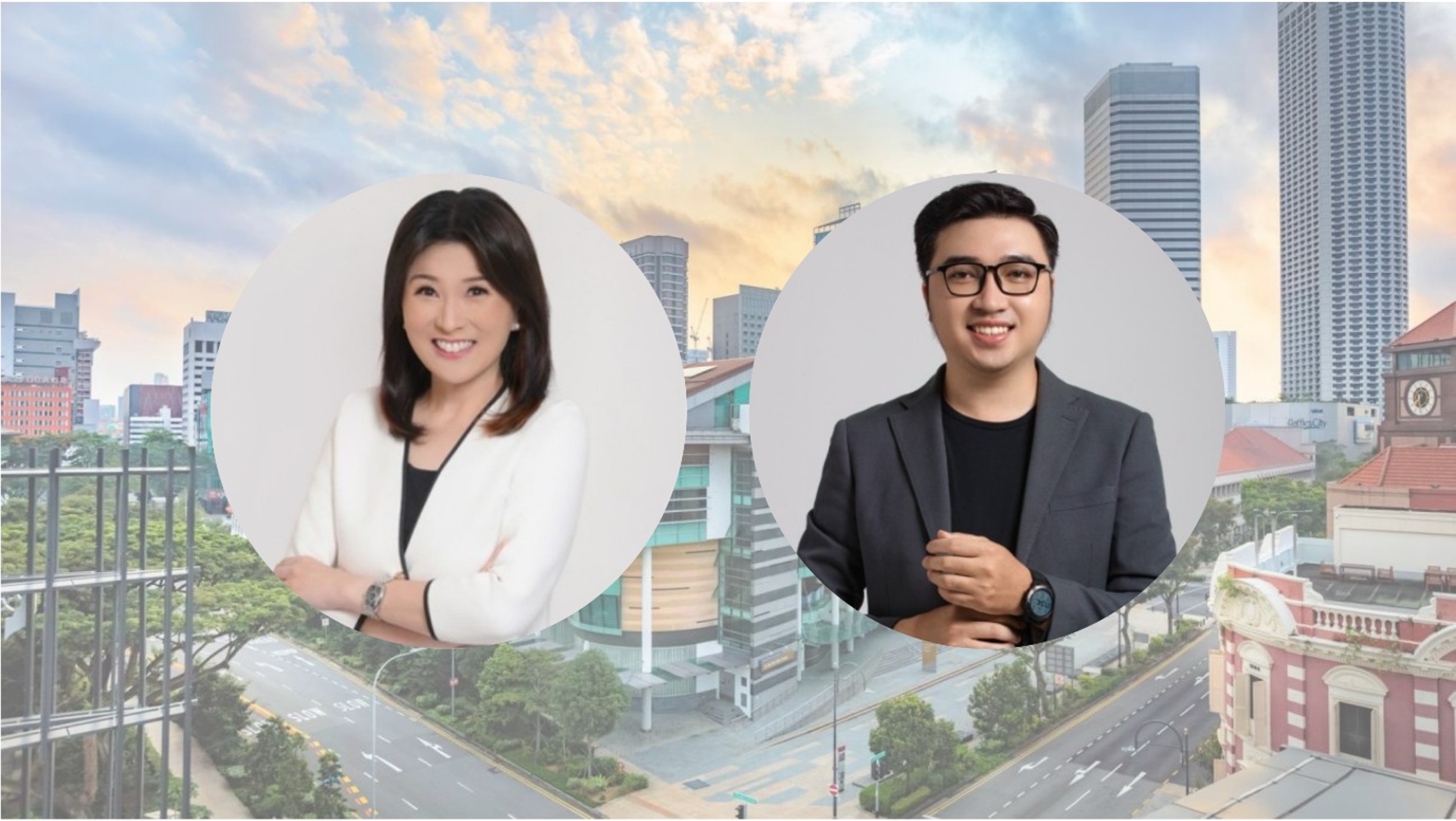
At a recent SMU MBA and Executive MBA information session, two alumni shared candid reflections on how their journeys at SMU shaped not only their careers, but also their confidence, leadership mindset, and approach to navigating change.
Coming from vastly different industries and backgrounds, both alumni discovered that the value of the programme extended far beyond technical knowledge.
From Vietnam's Startup Scene to AI Transformation at Singtel
For August, an SMU MBA alumnus from Vietnam, the decision to pursue an MBA came at a pivotal moment.
Having worked primarily in startups within Vietnam's tech ecosystem, he found himself increasingly drawn toward the growing intersection of data, AI transformation, and business strategy.
Today, he works at Singtel as a Business Planning Manager, helping drive AI and data transformation initiatives across the organisation.
But according to him, the challenge was never purely about technology.
"The hard part is the people," he shared. "People already know what they wanted. They already have their way of doing things. So changing the way of working is not easy."
His role now involves bridging the gap between technology and business teams, helping finance managers, sales teams, and product managers adopt AI tools and data-driven processes more effectively.
The transition from Vietnam's startup environment to a large-scale Singapore corporation was a significant shift.
"That's where SMU came in," he reflected. "SMU acted like a bridge. It gave me not just the classes, but also the people and opportunities."
Why He Chose an MBA Instead of a Pure Tech Programme
Interestingly, August initially considered pursuing a highly technical AI-focused programme instead of an MBA.
But as AI rapidly transformed industries, he realised he wanted broader business versatility rather than being confined to one specialisation.
"At that time, AI was growing very fast. ChatGPT was launching and everything was changing," he said. "Honestly, I had no idea what my job would look like in five or ten years."
Rather than narrowing his options, he wanted a programme that would expand them.
"Choosing an MBA gave me more flexibility and more options for the future."
SMU's MBA programme ultimately stood out for three key reasons: its shorter duration, curriculum flexibility, and strong return on investment.
"Ten to fifteen months made sense for me because I didn't want to pause my career for too long," he explained.
He was also drawn to the programme's flexible structure, which allowed students to explore different electives and specialisations before deciding where to deepen their expertise.
"When I looked at the SMU curriculum, it didn't lock you into one path immediately. You could explore first, test different areas, and then decide what you wanted to pursue."
Learning to Think Fast, Speak Up, and Adapt
One of the biggest personal transformations during the MBA journey had little to do with grades or exams.
It was learning how to become comfortable speaking up.
"To be honest, I was quite introverted," August admitted.
The highly interactive classroom environment initially felt intimidating.
"I had never experienced a class with that much interaction before. You need to prepare, speak up, debate, and formulate your ideas quickly. In a class of 30 people, you really have nowhere to hide."
But over time, the experience pushed him to become more confident in articulating ideas under pressure.
"It taught me how to think on my feet, listen quickly, and communicate clearly."
Beyond communication skills, the pace and breadth of the MBA curriculum also trained him to learn quickly across unfamiliar domains.
"In one class, you could be discussing finance. In another, leadership or business strategy. Every week was a completely new topic."
Rather than mastering one narrow technical area, he developed the ability to absorb new concepts quickly and connect ideas across disciplines.
"You learn how to think end-to-end. You learn how to look at customer perspectives, risk, operations, execution, and strategy together."
That broader thinking now shapes how he approaches projects and decision-making at work.
"The emails I write, the reports I prepare, and the decisions I make are now much more holistic."
Networking That Happened Naturally
For many MBA candidates, networking can feel transactional or forced.
For August, one of the programme's biggest strengths was how collaboration naturally created deeper relationships.
"As an introvert, networking was never my strength," he shared. "If you put me in a networking event, I would probably stand quietly in the corner."
But SMU's heavy emphasis on group projects changed that dynamic.
"The programme forces you into projects together, and because of that, the networking happens naturally."
Working closely with classmates across multiple projects allowed students to see one another beyond polished professional profiles.
"You see each other's strengths, weaknesses, and how people deal with stress and challenges. That creates real relationships, not just superficial networking."
Those relationships continued well beyond graduation.
"Even after we graduated, we still reach out to each other for advice, perspectives, and sometimes even opportunities."
Returning to the Classroom After 20 Years in Industry
For Tracy, an SMU Executive MBA alumna and currently serving as APAC Regional Functional Director at PSI CRO, a global contract research organisation, the motivation for pursuing an EMBA was very different.
With more than two decades of experience across hospitals, pharmaceutical companies, biotechnology firms, and clinical research organisations, Tracy was not looking for a promotion or career reset.
Instead, she saw the EMBA as an opportunity to broaden her perspectives, challenge her thinking, and continue evolving as a leader.
"You don't necessarily need an EMBA at my stage to move upward anymore," she shared candidly. "For me, it was more about widening and broadening my perspective."
Throughout her career, Tracy has consistently invested in professional development and lifelong learning.
"I'm a firm believer in lifelong learning," she said.
"Professional life is like pouring continuously from a jug. Continuous learning is what refills it."
"When we work for many years, life can become repetitive. Education becomes a way of continuously topping yourself up."
Why SMU's EMBA Stood Out
Before choosing SMU, Tracy explored several MBA and EMBA programmes.
What ultimately stood out was not simply the curriculum, but the learning environment.
"It was the vibe," she explained.
At this stage of her career, she was not looking for a heavily lecture-based academic experience.
"I'm paying to enjoy the process too," she joked.
SMU's highly interactive seminar-style pedagogy immediately resonated with her.
"When I sat in on some of the sessions, I could immediately feel the interaction. I felt comfortable with both the environment and the people."
The city campus, programme duration, and broader postgraduate ecosystem also appealed to her.
She appreciated the opportunities to engage with experienced professionals from diverse industries while participating in mentoring, networking, and alumni activities.
Broadening Perspectives on Leadership
Looking back after completing the EMBA, Tracy believes one of the programme's most valuable outcomes was not a dramatic transformation, but a gradual evolution in how she approaches leadership and stakeholder engagement.
"I would not say the EMBA completely changed my leadership style overnight," she reflected. "But it made me more intentional in how I approach stakeholder alignment and communication."
Today, much of her work involves aligning stakeholders across functions, markets, and regions while translating strategy into operational execution.
The EMBA exposed her to leaders from a wide range of industries and backgrounds, helping her think more deeply about how initiatives are perceived and adopted across different organisational contexts.
"The exposure to leaders across different industries made me think more deeply about how initiatives are perceived differently across markets, organisations, and stakeholder groups, especially in complex regional and global environments."
The programme also sharpened her communication skills and strengthened her confidence in executive-level discussions.
Through regular presentations, debates, and classroom discussions, she was continually challenged to articulate ideas clearly, engage different perspectives, and challenge her own assumptions.
"It was less about one defining moment and more about the cumulative experience of the programme. The constant discussions, presentations, and debates pushed me to articulate ideas more clearly and challenge my own assumptions."
What stood out most was the diversity of perspectives in the classroom.
"When you're in your own industry for a long time, you become very comfortable. But in the EMBA classroom, you're surrounded by leaders from completely different industries."
That environment reinforced an important lesson.
"You realise that many leadership and organisational challenges are transferable across industries."
For Tracy, this broadened her confidence to contribute to strategic and organisational discussions beyond her immediate functional expertise.
More Than Just a Degree
Although their backgrounds and motivations were vastly different, both alumni echoed a similar sentiment: the value of the MBA and EMBA extended far beyond academic knowledge.
For August, the MBA was about becoming more adaptable, confident, and future-ready in an increasingly AI-driven world.
For Tracy, the EMBA reinforced the importance of continuous learning, intellectual curiosity, and maintaining a broader perspective even after many years in industry.
"The EMBA probably did not completely change my career path," she reflected. "But it broadened how I evaluate opportunities and engage in strategic and organisational discussions beyond my immediate functional domain."
Both alumni also highlighted the importance of the people around them.
From classroom debates and collaborative projects to lifelong friendships and professional networks, much of the learning came from peers as much as professors.
As industries continue to evolve through AI, digital transformation, and increasing global complexity, both believe one capability will remain essential: the ability to continuously learn, adapt, and connect ideas across disciplines.
And perhaps that is what ultimately defines the SMU MBA and EMBA experience.
Not simply helping professionals earn another qualification, but helping them become more thoughtful, adaptable, and effective leaders throughout their careers.