




There are students who choose an MBA to accelerate their career; and then there are students like Chika Mii, who choose it to expand who they are.
Before she arrived in Singapore, Chika had built a career working for almost a decade in Japan’s financial industry, with the greater part focused on analytics and strategy, advising regional leaders and shaping decisions across APAC markets. From the outside, it looked like she had already climbed far.
But inside, she carried a quiet question many professionals, especially Japanese will recognize: Could she grow even further if she pushed herself into an environment completely different from everything she knew?
That question led her to pursue her MBA at SMU – something she mentions has been one of the most transformative experiences of her life.
Leaving Japan for Singapore: A Decision Rooted in Growth
Unlike many international students, Chika didn’t come to Singapore for a career change; she already had a respected role, strong technical skills and regional exposure. What she was looking for was something harder to define: a global perspective, the confidence to communicate across cultures, and the ability to lead beyond her comfort zone.
“I knew I could continue in Japan,” she said. “But I wanted to challenge myself. I wanted to grow in a way that staying home could not give me.”
Her honesty was refreshing as she talked about how her decision to pursue her MBA wasn’t about running away from anything but running towards the person she wanted to become; and she knew that if she wanted to work more effectively across borders, she had to learn outside Japan.
Why SMU: A Human-Centred Environment for First-Time Global Learners
For Chika, SMU stood out for one reason: the people. Based on her research, she knew the curriculum would be a strong mix of analytics, strategy, leadership, and finance. But what she wasn’t expecting was the warmth and support she found the moment she stepped into her cohort.
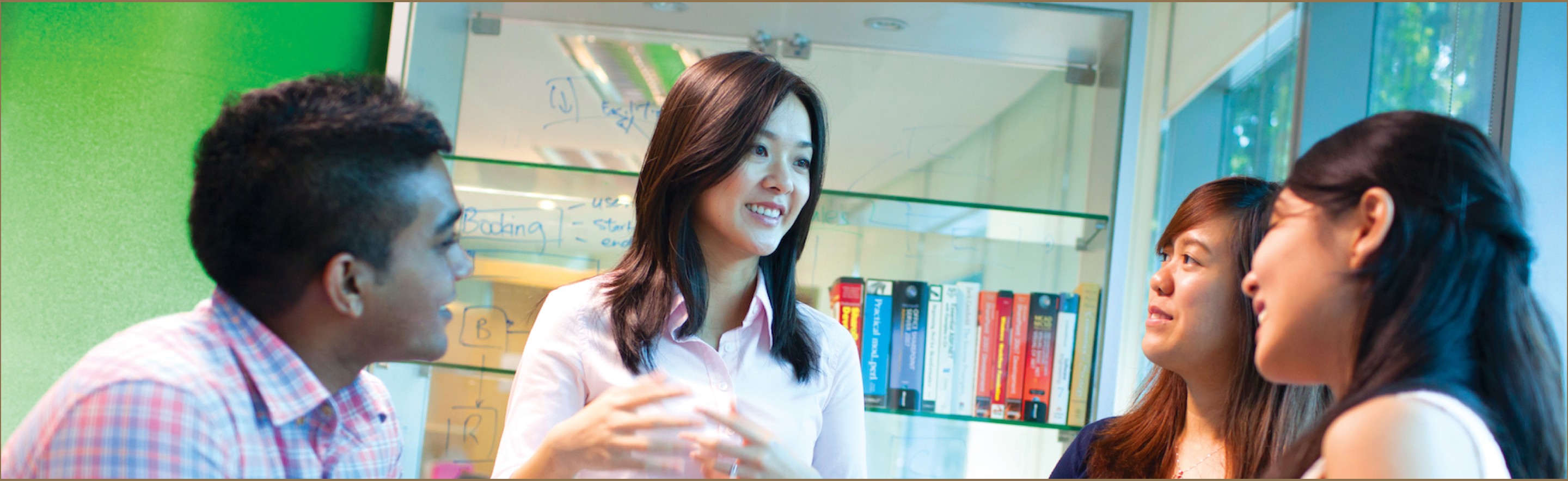
In Japan, classroom expectations are often clear and structured. At SMU, she found that learning happened through debates, group projects and constant interaction - something she admits she initially found overwhelming.
English wasn’t her strongest language. Some professors spoke fast. Technical modules like business analytics pushed her to the edge of frustration at times, and being surrounded by classmates from dozens of countries made her wonder if she would ever catch up.
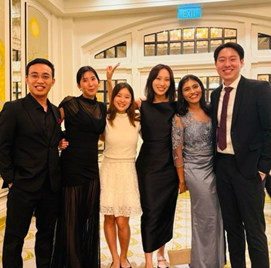
But she herself was able to gauge a shift in the environment around her when she witnessed her classmates recognizing the effort she put in since day one – like contributing to class discussions, asking questions, leading group tasks – she felt encouraged by her peers and this helped her grow her confidence multifold. “It didn’t matter how small the progress was,” she said. “My classmates always recognised it. They motivated me every time. I never felt alone.”
For Japanese students who worry about fitting into global classrooms, Chika’s experience shows something important – that SMU is a place where students are valued for their ideas, effort, and willingness to engage, and where the ability to communicate the language of the programme – whether through business skills or empathy – is respected.
The Confidence That Comes From Being Seen
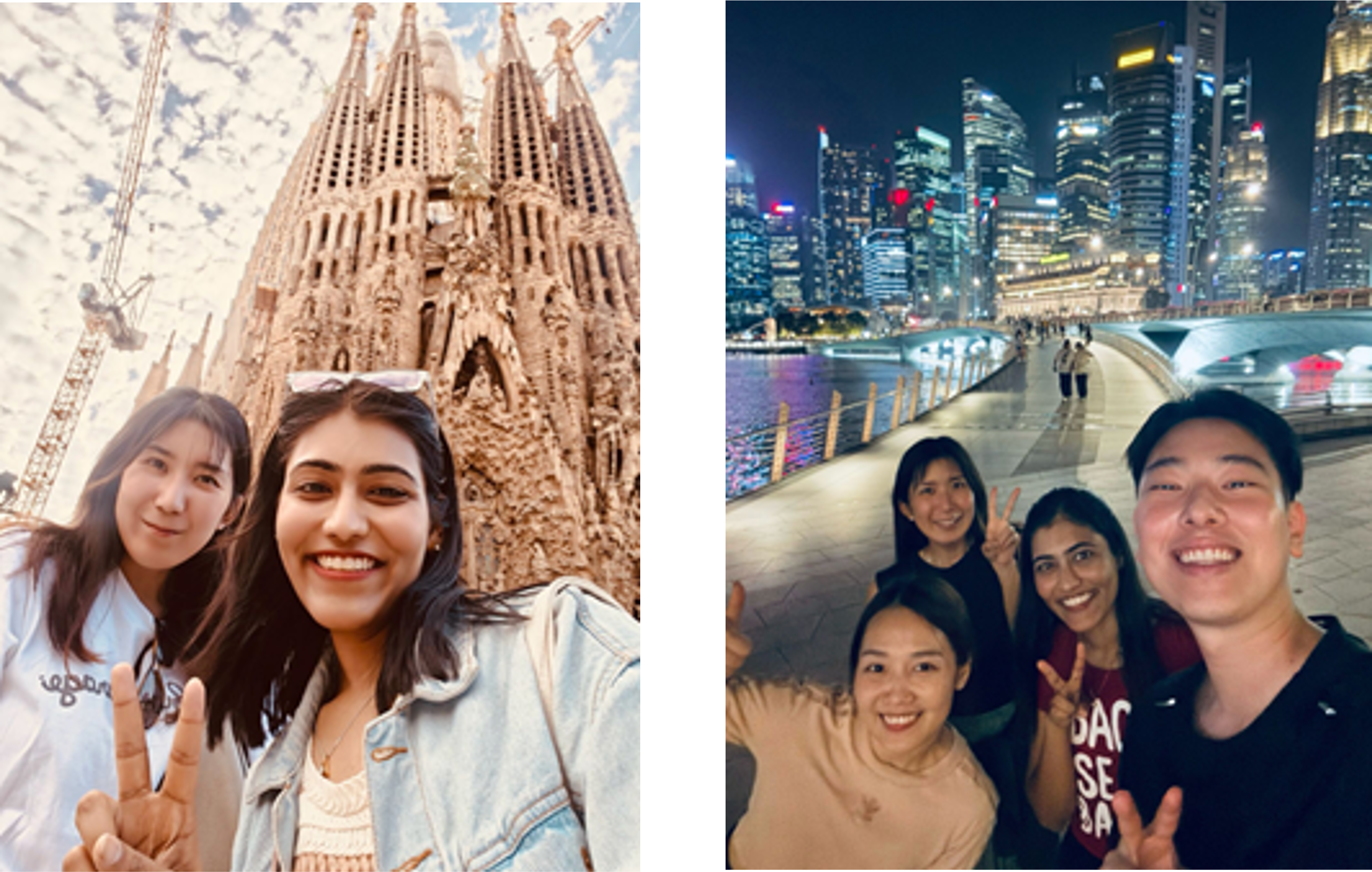
Chika speaks humbly about her growth; her classmates, on the other hand, describe her differently – as someone who is courageous, adventurous, and someone who pushes herself even when things feel uncomfortable.
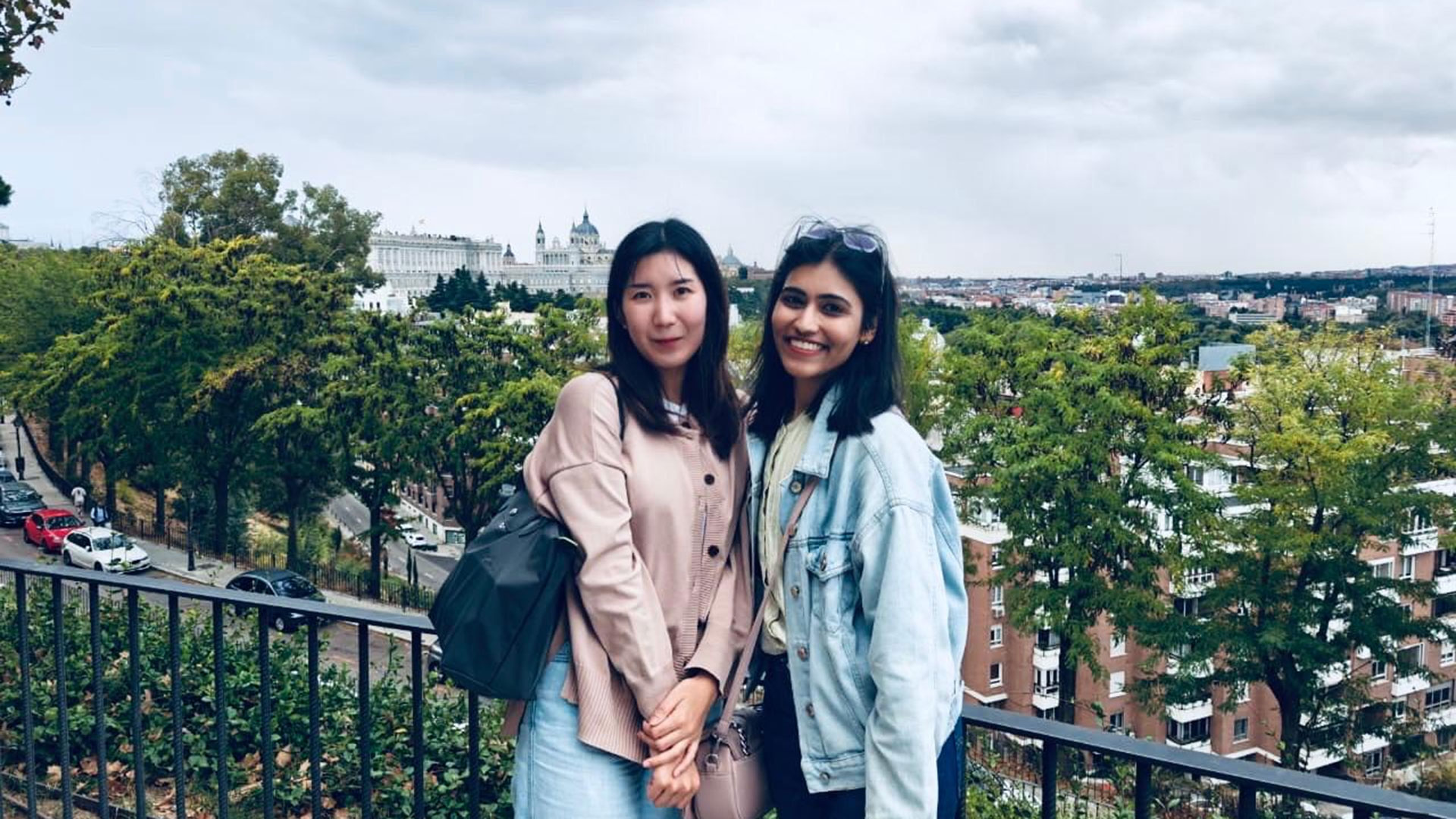
As her journey progressed, Chika undertook electives outside her comfort zone, attended networking sessions even when she worried about the language, went on an exchange trip to IE University, Madrid, and even volunteered for group roles.
Each time that she challenged herself, she gained something she could never have learnt in a familiar environment: the confidence that comes from being seen, heard and supported by people who want you to succeed.
For Japanese professionals accustomed to structured corporate environments, thoughtful communication, and consensus-driven decision-making, SMU offers a new muscle: learning to trust yourself even when everything around you feels new.
What Chika Wants Japanese Students to Know
Towards the end of the conversation, Chika paused. Then she shared what she wishes she could tell her colleagues and friends back home, who feel the same fears she once did.
“If you worry about your English, your confidence, or cultural differences - don’t let that stop you,” she said. “Once you jump into the environment, you will find support everywhere.”
She believes the MBA is not just for the outspoken or the naturally global, but for people who are eager to grow, but may be afraid of taking the first step. Her message to prospective (Japanese) students is simple and sincere:
- You don’t need perfect English, but willingness and determination.
- You don’t need to be confident – confidence will come as you immerse yourself fully into the MBA programme.
- You don’t need to match every skill your classmates have, but you need to make sure to show up fully.
- And the best part – you won’t have to do it alone - classmates, professors and mentors will guide you.
Chika’s story is proof that quiet students can thrive in global classrooms, and that humility is not a barrier but a strength.
“You are stronger than you think. And once you are here, you will not be alone.” And for many Japanese professionals ready for a global step, that support makes all the difference.
You can connect with Chika Mii on LinkedIn here.