




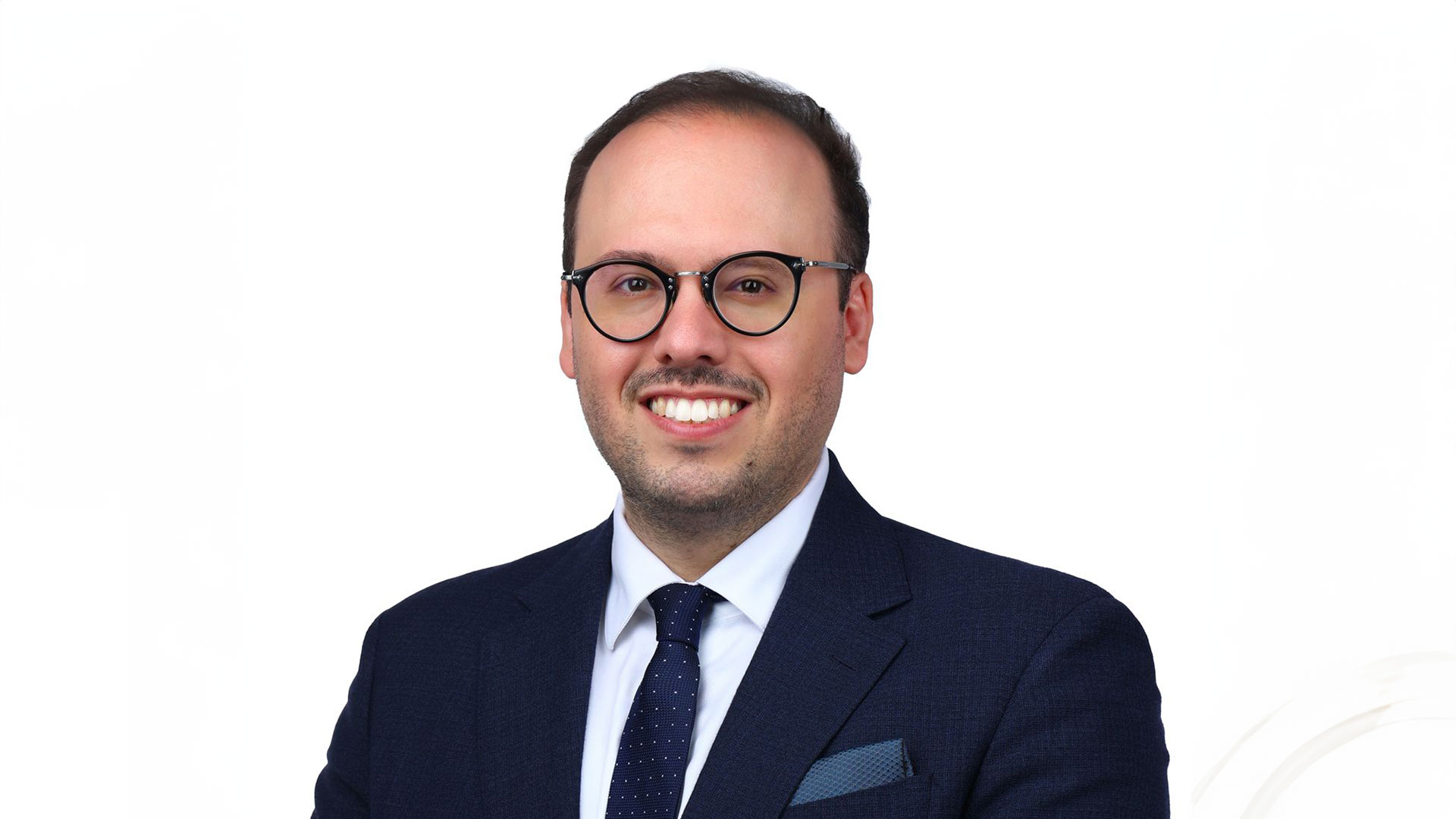
When Tobias Bufler arrived at SMU, he wasn’t the typical MBA candidate. He carried a very different toolkit from most of his cohort - a licensed pharmacist from Germany with a Master of Pharmacy from the University of Innsbruck, Austria, he had spent several years in quality assurance, manufacturing, and distribution - the highly regulated, deeply technical world of the pharmaceutical industry.
Business, in contrast, was something he had always wanted to study but never had the academic language for.
“I knew how to run processes, manage compliance, lead projects - but I wanted to understand how a business actually works as a whole,” he says. “Not just my piece of it.”
Tobias searched for MBA programmes broadly - Europe, the UK, even other parts of Asia, but found himself drawn to Singapore and to SMU’s model: intimate, discussion-driven, and rooted in the realities of Asian business.
“It just made sense. A boutique business school, strong professors, case-based learning, and a region full of growth and opportunity.”
What he didn’t expect was how deeply the year would reshape his thinking.
Learning the Language of Business - From Scratch
Most people enter an MBA to refine skills they already use at work. Tobias entered it to build an entirely new foundation.
He dove straight into finance and operations, often stacking multiple modules on the same themes just to hear concepts explained through different lenses.
“Some people might find that repetitive. I found it extremely useful,” he says. “Hearing the same idea through different professors helped me build confidence - I wasn’t just memorising frameworks but actually understanding them in a variety of contexts.”
And then came a curveball he never saw coming: machine learning.
“When I joined the MBA, I wasn’t thinking about Python at all,” he laughs. “I had never coded anything in my life. But the programme pushed me into it. I’m not even close to being an expert, but I got my foot in the door - and that’s enough to start a long-term journey.”
This - building fluency in the ‘language of business’ - became one of his biggest takeaways.
“You start to see the organisation as a whole system. Compliance affects operations. Operations affects finance. Finance affects strategy. You stop thinking in silos.”
The Value of Being Out of Your Depth
Coming from a purely scientific background meant Tobias was constantly pushed to his limits.
Machine learning. Quant-heavy modules. Leadership courses that forced him to navigate unfamiliar team dynamics. “I chose the challenging modules deliberately,” he says. “If you only do what you already know, there’s no point doing an MBA.”
But instead of feeling lost, he found himself adjusting quickly.
“You sit down, study, and do the work . Adults know how to work and learn – the MBA programme just forces you to stretch in the right ways.”
And somewhere along the way, classroom lessons started showing up in his life outside class, almost without him realising.
“It’s unconscious. But you start analysing problems differently. You start speaking with a more holistic business mindset. You see implications across operations, finance, people, strategy. That shift is very real.”
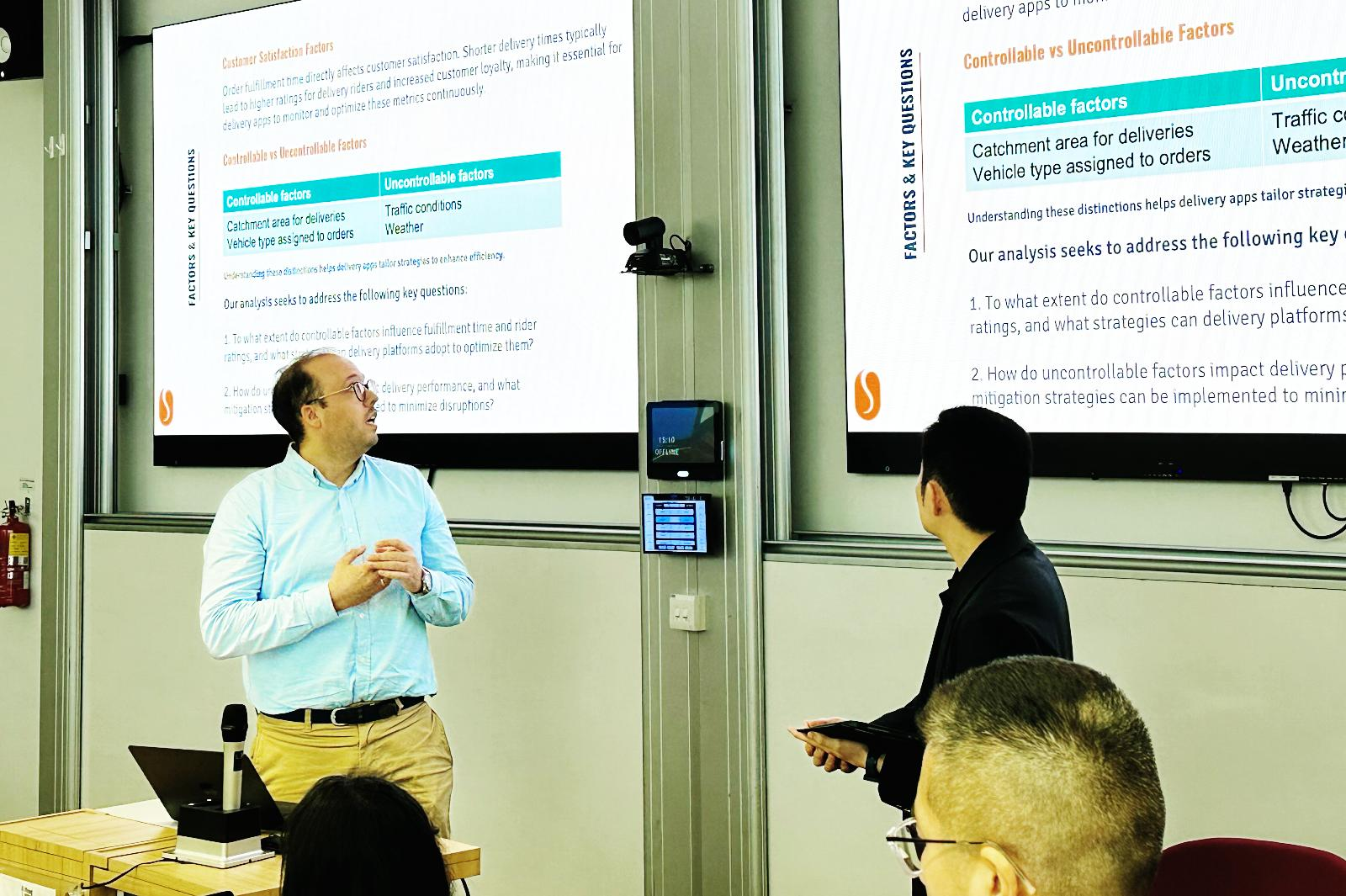
What Happens When a Technical Professional Joins a Leadership Classroom
Group projects became a training ground. Not always comfortable - but consistently revealing.
“You gain a deeper understanding of how people work - how to navigate conflict effectively and influence others even without formal authority. After a few terms, you can tell how someone thinks within five minutes. You know how to work with them.”
Tobias also credits SMU professors for turning the classroom into an engine of real professional change.
“The quality of the professors is what makes the modules outstanding. They shape the entire learning experience. That was a big reason I chose SMU.”
A Network That Expands Your World
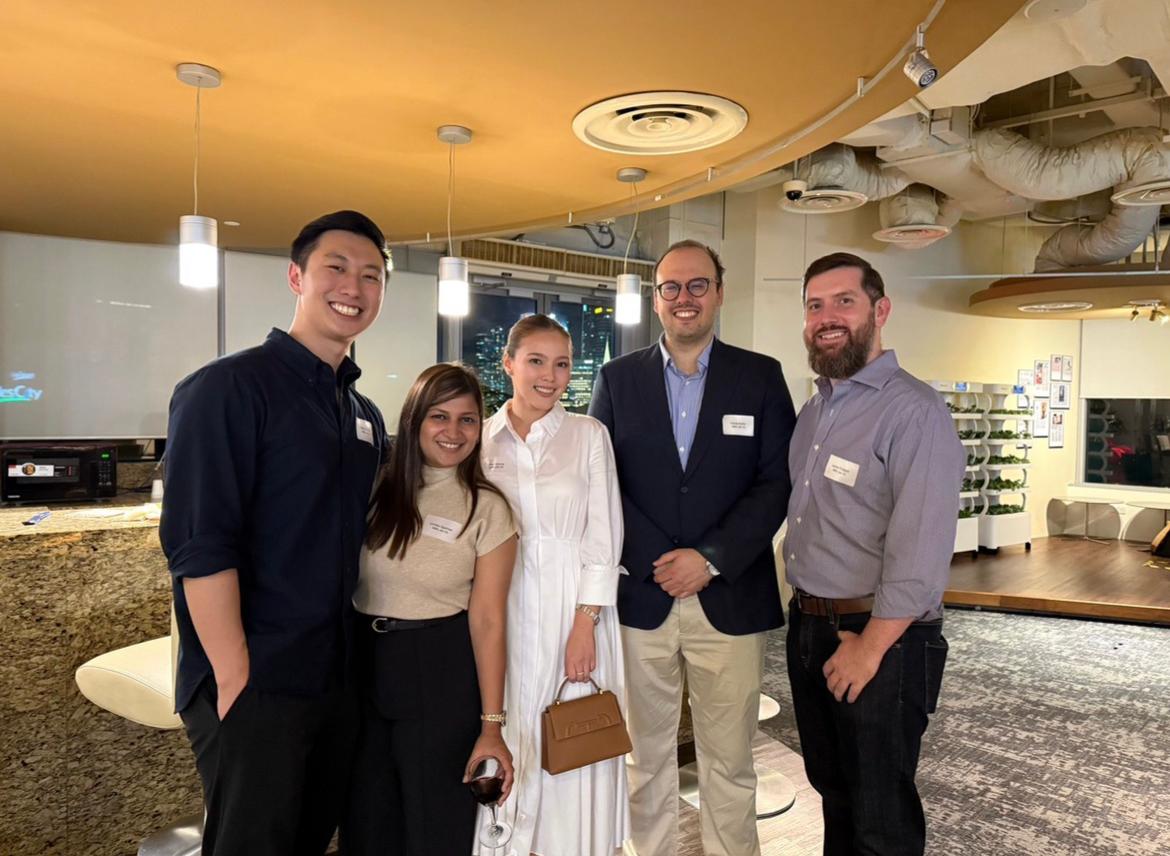
Outside the classroom, Tobias threw himself into the SMU ecosystem.
He became Vice President of the Executive Leadership Committee that represents the MBA student body in organizing events and working closely with the cohort, the professors, and the MBA Office. He attended every networking event he could find - across MBA, EMBA, master’s programmes, and exchange students.
“You meet people from everywhere. Different industries, different levels of seniority, different countries. And those conversations change how you see the world.”
The mentorship programmes became another unexpected anchor.
His first mentor - through the ELC - was a senior healthcare leader. His second - through SMU’s university-wide mentorship programme, was a German healthcare executive.
“The access is incredible. These are leaders who’ve been through decades of change. Getting to learn from them was invaluable.”
A Global Lens, But Rooted in Asia
Despite his European education and experience, Tobias says the most meaningful learning came from understanding how business works in Asia.
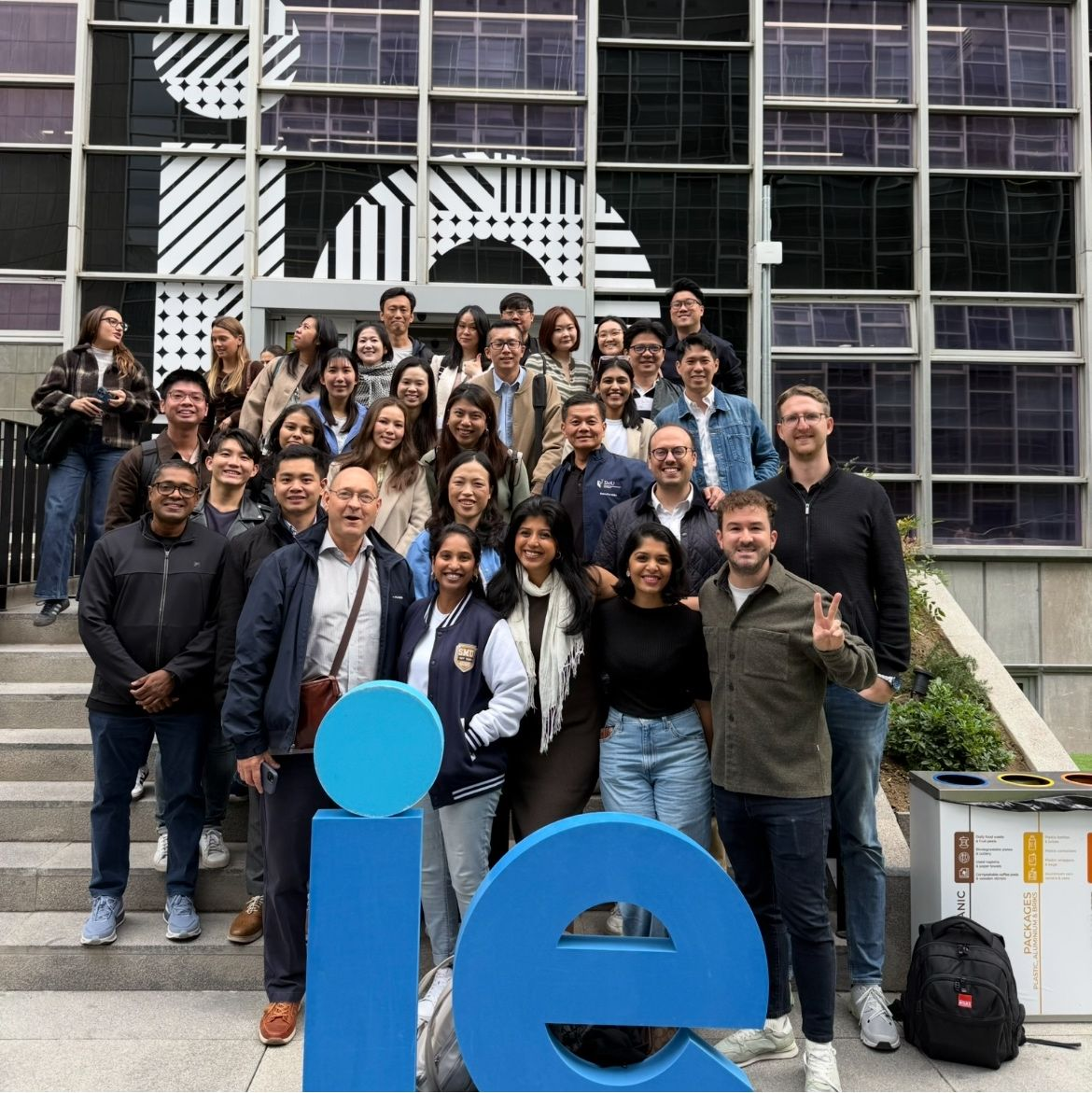
He spent a week in Madrid on an exchange programme at IE University - but even there, the comparison reinforced why he chose SMU. “Our professor in Madrid - an advisor to President Obama - taught strategy very differently. That contrast helped me appreciate how strong the Asian business perspective is here. Singapore is a hub for Southeast Asia. The exposure you get is global, but the grounding is uniquely Asian.”
From Classroom to FedEx and Beyond
Tobias interned at FedEx in a compliance and sales solutions role - and immediately felt the impact of the MBA. “Understanding how business functions tie together helped me become effective very quickly. I could speak the language of the business from day one.”
He made a point to talk to as many leaders as he could.
He absorbed processes. Asked questions. Pushed for impact.
The result: his internship was extended, and he has since converted it into a full-time role.
Doing an MBA While Balancing Family
Balancing studies with family life demands discipline, but for Tobias, it became something unexpectedly meaningful. “My wife was studying for her law exam too. We pushed our desks together and studied side by side every night. It became our routine. Our shared journey.”
Support from family and Singapore’s culture of ambition made the experience not just feasible, but fulfilling.
Why Experience Matters
Tobias is clear about this: having work experience makes the MBA exponentially more meaningful. “Two to three years is the minimum. Five years is ideal. You need some exposure to real organisational dynamics - people, processes, constraints, to fully appreciate what you’re learning.”
Why SMU — And Why Now
For anyone considering the SMU MBA, Tobias points to three things:
- The professors. “They shape everything. Their research, their industry experience, their ability to make theory practical - that’s what drives the whole programme.”
- Singapore as a learning environment. “A global business hub, English-speaking, diverse, full of opportunity. You learn as much from the city as from the classroom.”
- The network. “People from all over Asia, Europe, the US. You don’t just get classmates, but a community to rely on.”
But ultimately, his biggest takeaway is internal: “I wanted to study the language of business - to talk to customers, leaders, stakeholders with confidence. The MBA gave me that foundation. Now it’s on me to use it and create impact.”
Connect with Tobias here.