





As artificial intelligence (AI) becomes increasingly woven into everyday life, a critical question is no longer whether these systems can assist people, but how they should do so. From classrooms to workplaces, designing effective human-machine collaboration has emerged as a key priority.
At Singapore Management University (SMU), Assistant Professor Li Jiannan from the School of Computing and Information Systems (SCIS) explores how AI can enhance human capability through both his research and teaching in the Master of IT in Business (MITB) programme.
“In my work, the core question has been how machines—AI and robots—can augment human abilities,” he says. “I was drawn to this field because it allows us to bridge computing, social science, and design.”
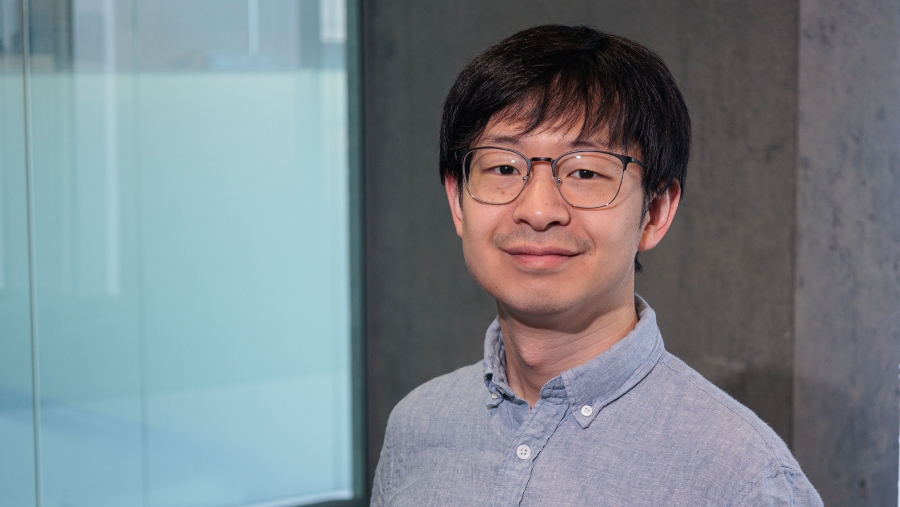
Assistant Professor Li Jiannan.
Under the MITB programme, Asst Prof Li teaches Human-AI Interaction Design, drawing on his research to explore how AI operates in user-facing contexts, while equipping students with principles for designing systems that are intuitive, trustworthy, and effective.
“I believe that technology should adapt to humans. Technology can evolve fast, but humans can’t,” he explains. “So, I take the approach of understanding human practices first, before designing technology to work with them.”
AI in physical workspaces: Guiding remote teams through complex tasks
One facet of Asst Prof Li’s research looks at how AI can support teamwork in physical environments. In a recent study on language-driven robotic telepresence, his team developed a system that enables a single expert worker to remotely guide multiple on-site workers through complex tasks. The system, named Collaborative LLM-based Embodied Assistant Robot (CLEAR Robot), was designed to facilitate coordination in real time.
Instead of directly controlling the robot, the expert gives verbal instructions for the robot to process. The robot then generates real-time visual summaries of the instructions on its interface, guiding workers through complex physical tasks such as machine assembly. To streamline collaboration, the expert can also direct the robot to autonomously move towards the workers to support them.
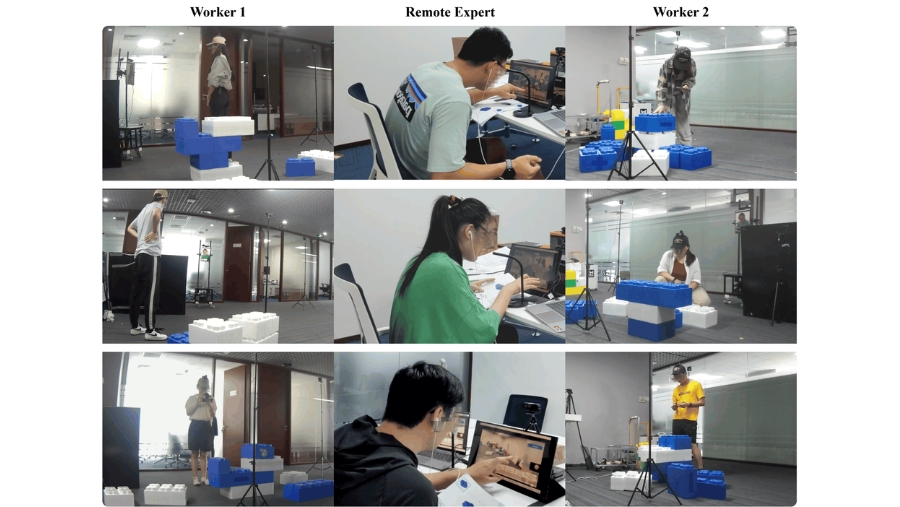
The CLEAR Robot streamlines collaboration by enabling an expert to remotely guide workers through complex tasks.
Beyond industrial settings, Asst Prof Li sees wider potential applications for the CLEAR Robot system.
“I believe language interfaces will become more common in everyday life, such as wearable assistants like smart glasses. They could understand conversations and help with tasks such as drafting to-do lists and schedules,” he shares, noting that privacy-aware, on-device AI will be key to making such systems viable.
For MITB students, this research provides practical insight into how AI systems can be designed for real-world operational contexts, bridging technical development with business and workflow applications.
AI for information navigation: Making information easier to understand and trust
Asst Prof Li also explores how AI can help people navigate online information more effectively. In another study, his team built Compendia, a system that generates visual narratives from articles to help users understand complex topics more intuitively and reduce cognitive burden. To their knowledge, it is the first system capable of transforming raw web content into coherent and engaging visual narratives.
A key design decision in Compendia was to prioritise information reliability. Based on a user query, the system analyses multiple articles to cluster data points and generate visual narratives. At the same time, it provides clickable source references for users to trace the information origin. This is particularly relevant as generative AI search becomes more prevalent.
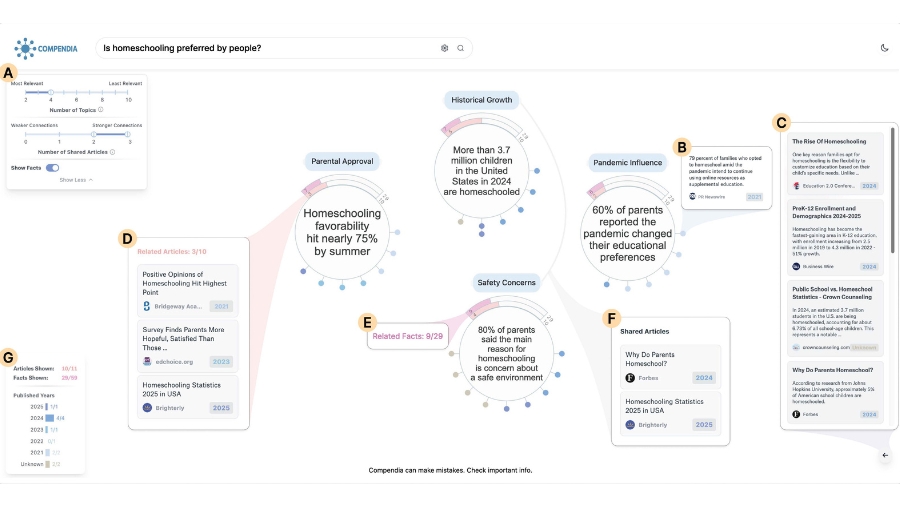
Based on a user query, the Compendia generates visual narratives, allowing users to see the data points and articles that are related and relevant to the topic.
“In the age of generative AI, where hallucinations are a concern, truthfulness and source credibility are more important than ever,” says Asst Prof Li. “It will likely require a collective effort from AI providers, media, and the public to rethink how we evaluate information at scale.”
The team also found that while users appreciated having access to large volumes of data, their ability to interpret such information is limited. This highlights the importance of incorporating personalisation features, such as the users’ preferences on source and information granularity, in future iterations to help them make better use of information over time.
Taken together, these findings underscore the importance of designing AI systems that are transparent and trustworthy, while also helping users make meaningful use of information. These principles are also explored in Asst Prof Li’s MITB course, where students examine the opportunities and challenges of designing AI systems.
AI in learning environments: Rethinking how software learning is guided
A central idea taught in the MITB programme is that AI systems design should be grounded in real-world human behaviour. This is also reflected in another area of Asst Prof Li’s research, where his team explored design opportunities for on-screen AI assistance system in software learning.
Focusing on the balance between instruction and autonomy, the study examined the use of instructional modalities in graphic design software learning to inform the design of AI-assisted learning systems. It found that while combining multiple forms of guidance, such as visual cues and verbal instructions, can improve learning outcomes, the on-screen nature of software learning raises important usability-related considerations.
One key finding on digital territoriality suggested that teachers may hesitate to intrude on student workspaces, preferring to annotate rather than take over through remote control.
Building on the findings of the study, the team proposed a few design opportunities for the AI system, such as a ghost cursor feature showing the teacher’s cursor movements to provide spatial instructions without taking control of the student’s workspace.
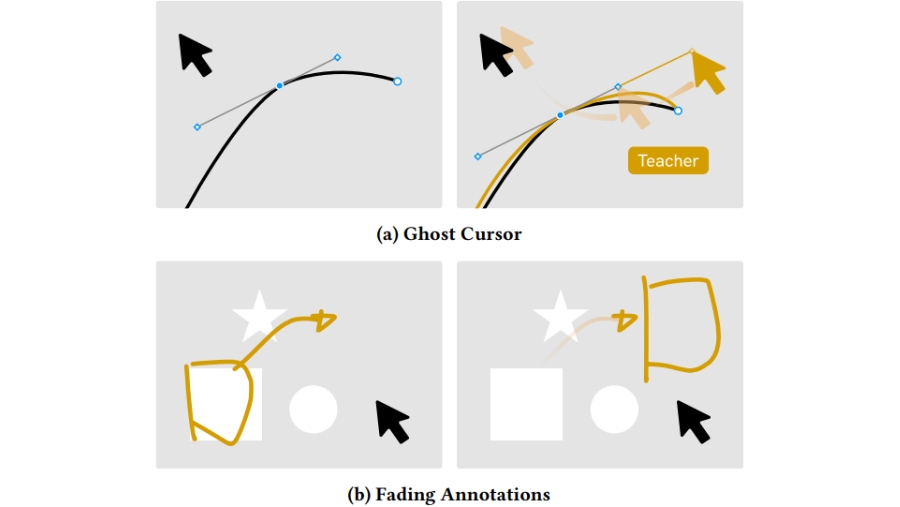
Some design opportunities for the AI system include a ghost cursor that shows the teacher’s cursor movements, and annotations that stay long enough to provide guidance for the student.
“The key to balancing autonomy and control is to better understand whether the learner is struggling,” Asst Prof Li explains. “That requires more personalised ways of assessing their current state.”
At the same time, he advocates for designing AI systems that support meaningful engagement. “AI should not reveal the answer immediately; there should be space for the student to go through some ‘productive struggle’ for effective learning,” he adds.
Learning human-AI collaboration through the SMU MITB programme
Across Asst Prof Li’s research projects lies a common thread: AI works best when it complements human behaviour, rather than overriding it. This perspective shapes both his research and teaching in the MITB programme, where technology is designed to address real-world challenges.
Through the MITB programme, students are exposed to the design principles behind AI systems that are not only technically capable, but also usable, trustworthy, and grounded in real-world human behaviour. In the process, they develop technical, business, and leadership capabilities needed to drive responsible innovation in an evolving digital landscape.
As the field continues to advance, Asst Prof Li expects the conversation around human-AI collaboration to continue evolving, noting, “It is the goal of researchers to work towards a future where people find more meaning and fulfilment, even as automation increases.”
For students aspiring to explore further in this field, he advises, “Keep an open mind and read across disciplines. Step outside the lab and engage with the people who will use the technology you are aiming to build.”