




Designing effective digital solutions goes beyond building what technology can do — it requires a deep understanding of what people truly need. For Avisenna Gusta, a student in the Digital Transformation track of the Master of IT in Business (MITB) programme at Singapore Management University (SMU), his capstone project became a defining lesson in this principle.
Through hands-on collaboration with a social service agency, he learned that successful innovation lies at the intersection of technical capability, human empathy, and real-world adaptability — a perspective shaped by the experiential learning approach of the MITB programme.
Building an AI companion to solve a real-world challenge
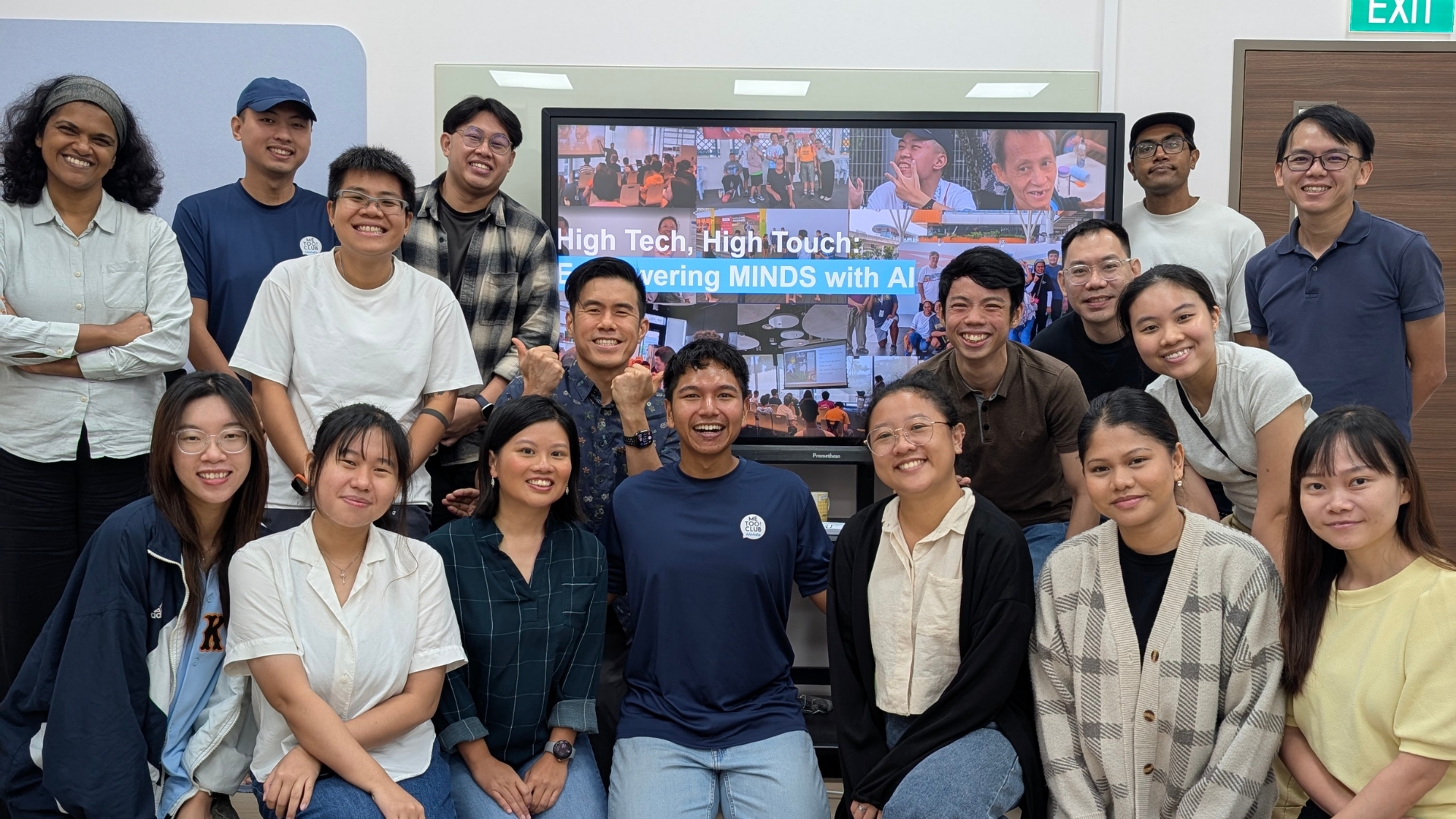
At the heart of Avisenna’s MITB capstone project was a practical challenge faced by MINDS (formerly known as Movement for the Intellectually Disabled of Singapore), a social service agency dedicated to supporting persons with intellectual disabilities and their caregivers.
The organisation runs the Me Too! Club, a programme that fosters social integration for persons with intellectual disabilities through structured social activities. While sessions may appear seamless, they require extensive planning behind the scenes — from ideating activities to preparing materials and coordinating volunteers. Over time, the team began facing “idea fatigue”, struggling to consistently generate fresh and engaging activities.
Recognising both the operational strain and its human impact, Avisenna set out to design a solution that could ease this burden.
As part of the MITB programme’s emphasis on solving real business problems, he developed the M2C Bot — an AI-powered digital companion that helps facilitators generate and structure activity plans. Built using Botpress and deployed via Telegram, the tool integrates multiple AI platforms to produce comprehensive outputs, from activity ideas to presentation materials and visual storyboards.
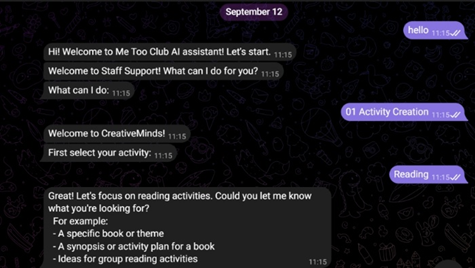
The AI bot helped to reduce the time taken for ideas generation.
More importantly, the solution delivered tangible impact. Tasks that previously took hours could now be completed in under two hours, freeing up the team to focus on what matters most: engaging meaningfully with participants.
The project demonstrated how AI, when thoughtfully applied, can augment human work rather than replace it — especially in people-centric sectors like social services.
Learning to design for people, not just systems
Beyond the technical build, the project became a powerful learning experience shaped by the MITB programme’s experiential approach.
Working directly with MINDS exposed Avisenna to challenges that cannot be replicated in a classroom. He had to navigate real constraints: time pressures, user preferences, and the unpredictability of live sessions.
This led to two key takeaways.
First, effective solutions must start with a deep understanding of user needs. While AI could generate structured plans, it often failed to account for real-world nuances — such as pacing and participant engagement. Human judgement remained essential as well.
Second, adoption is just as critical as innovation. A technically sophisticated tool holds little value if it is not intuitive or practical for users. Avisenna learned to design with usability in mind, ensuring the solution complemented existing workflows rather than complicating them.
“I see many AI adoption initiatives start with the technology and potential use cases, which is a valid approach. But I believe we need to truly understand the users first: their context, pain points, and intentions,” Avisenna reflects.
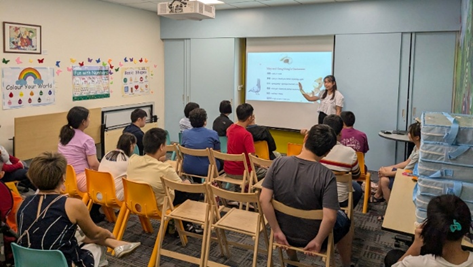
Beyond helping MINDS streamline their activity planning, the capstone project offered Avisenna firsthand insights into the opportunities and constraints of deploying AI solutions in a real-world environment.
These insights were reinforced through the MITB programme’s industry-relevant curriculum, which places students in real organisational contexts. For Avisenna, it was an opportunity to explore his long-standing interest in how technology shapes behaviour — not in theory, but in practice.
The result is a skill set that extends beyond technical proficiency: the ability to design solutions that are relevant, implementable, and impactful — qualities that are critical for future roles in digital transformation.
From capstone project to global research
Avisenna is now developing the project into a research output, which has been accepted for an oral presentation at the 7th International Association for the Scientific Study of Intellectual and Developmental Disabilities (IASSIDD) European Congress in Munich, Germany, in July 2026.
To fund the trip, he had launched a crowdfunding campaign that successfully reached its $3,200 goal through contributions from 32 donors. Reflecting on the response, he shares, “The response has been humbling. It showed me that people genuinely care about inclusive innovation, and that this work resonates beyond the classroom.”
He will present the research alongside Ms Julia Ng from MINDS and Dr Kiruthika Ramanathan, his research supervisor and Director of the Digital Transformation track of the SMU MITB programme. Together, they will bring the project to an international research community, contributing to broader conversations on inclusive, AI-enabled solutions.
Advancing careers through real-world exposure with the SMU MITB programme
Avisenna’s journey reflects what the MITB programme at SMU is designed to achieve.
Beyond building technical expertise, the programme immerses students in real-world problem-solving — working with organisations, tackling real challenges, and delivering solutions.
This combination of technical rigour and hands-on experience equips graduates to navigate the complexities of the digital landscape. They are not only trained to build systems, but also design solutions that matter — grounded in user needs, shaped by real constraints, and ready for implementation.
For aspiring digital transformation leaders, the MITB programme offers more than knowledge. It provides the experience, perspective, and confidence to turn ideas into meaningful impact.
For a deeper look into Avisenna’s project, explore his reflections below:
- What 6 Months of Building AI for MINDS Taught Me About Technology’s Limits
- How I Built an AI Assistant for Disability Services (and Why a Bot Wasn’t Enough)