





The executive suites of Google, Microsoft, and OpenAI may seem worlds apart from SMU’s buzzing city campus, but the competitive forces shaping Big Tech are the same ones future economists study in the classroom: market power, strategic rivalry, regulation, innovation, and scale.
As policymakers and businesses grapple with the implications of rapid technological change, competition economics—the study of how corporate rivalry affects pricing, innovation, and consumer welfare—has become increasingly important.
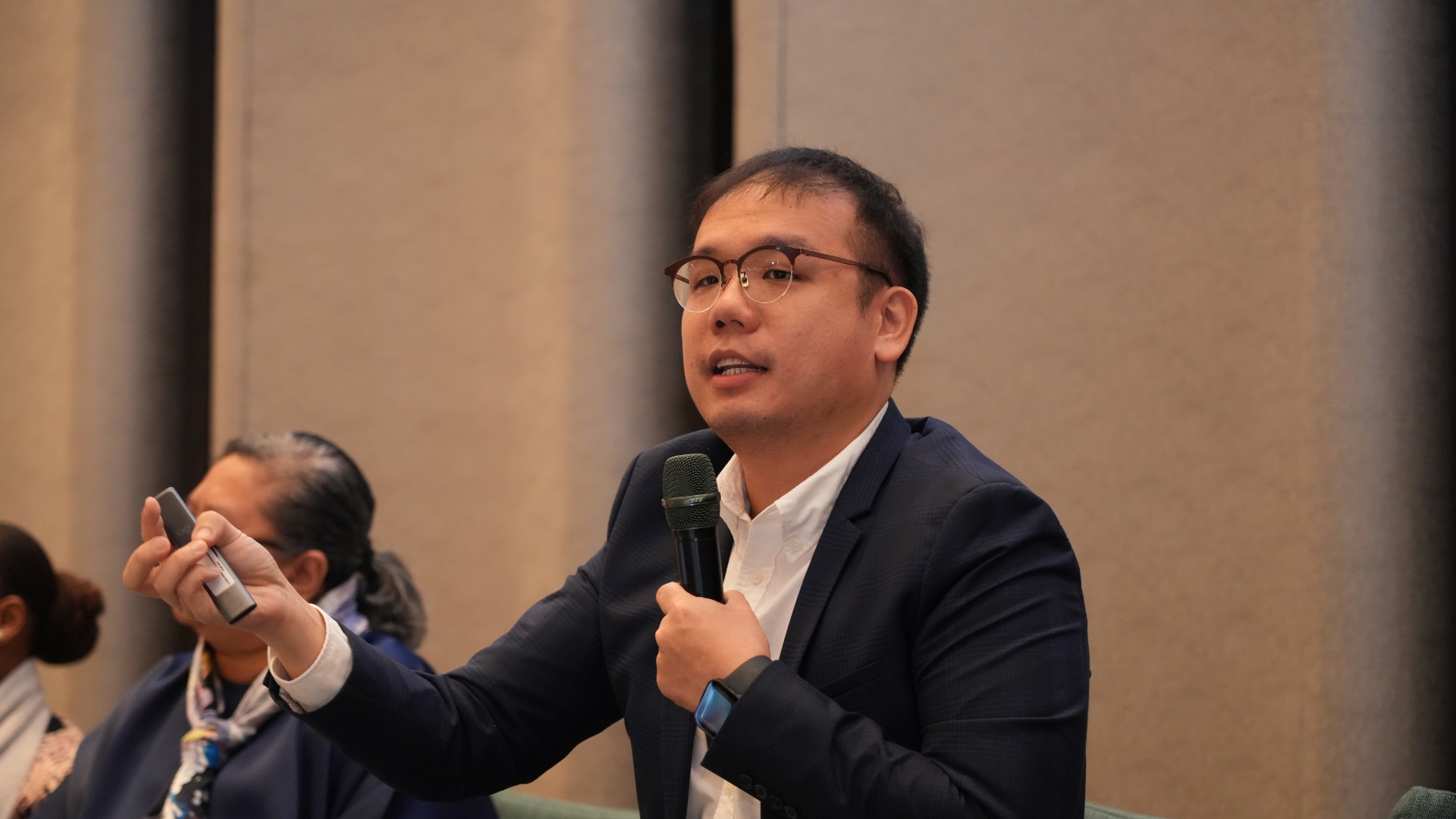
Drawing on his experience as a former competition law enforcer at the Competition and Consumer Commission of Singapore (CCS), and his role as a Competition Economist at Baker McKenzie Wong & Leow , School of Economics (SOE) Adjunct Lecturer Poh Lip Hang brings real-world dynamics into the SMU Master of Science in Economics (MSE) classroom.
“I saw teaching economics as a wonderful opportunity to share with budding economists what competition law and economics are really about, beyond the theories and textbooks,” he says.
“Outcomes are often not clear-cut, and economic arguments frequently operate under conditions of uncertainty and imperfect information.”
Through his Economics of Competition Law (ECON6024) module, students gain insight into how competition economics is applied in practice, from how regulators assess evidence and balance competing considerations, to how businesses develop their economic arguments in response.
More broadly, Lip Hang hopes to inspire students to see how economics shapes decisions that influence businesses, markets, and society
Bringing real-world competition economics issues into the classroom
Competition economics is changing quickly as governments respond to the growing influence of digital platforms, e-commerce, and Big Tech. For Lip Hang, this means the classroom cannot be detached from the policy debates unfolding around the world.
He regularly updates his MSE module materials to reflect current developments in competition policy, allowing students to examine issues that are actively shaping markets and regulation. Recent classes have explored topics such as the European Union’s Digital Markets Act and its implications for platform regulation in Southeast Asia; the adaptability of existing competition law analytical tools to assess technology markets; and whether competition policy and law should evolve in response to wartime conditions or global health pandemics.
The course also includes a research and presentation component, introduced in 2021, that gives students the opportunity to explore emerging competition policy issues beyond the core curriculum. One student group, for example, examined whether Southeast Asian competition authorities should follow the European Union in introducing ex-ante regulation — proactive rules designed to prevent harmful market behaviours or system failures before they occur — for digital platforms.
Through this component, students move beyond textbook models to test economic ideas against ongoing policy questions, reflecting the MSE programme’s emphasis on independent inquiry, applied learning, and real-world relevance.

Gaining insights from global economics experts
A distinguishing feature of the SMU postgraduate programmes, including the MSE, is strong industry engagement, with students having regular interactions with practitioners in the fields.
Lip Hang reflects this ethos strongly, inviting speakers from competition authorities, consultancies, and law firms from jurisdictions including Singapore, Malaysia, Hong Kong, Korea, Australia, Belgium, and the United Kingdom to provide his students exposure to diverse approaches to competition policy and enforcement.
“They also highlight the practical realities of real cases—how evidence is gathered, and how legal and economic arguments are developed in practice,” he shares.
Besides providing students with industry insights, these sessions enable them to explore career pathways and build professional networks within the competition economics community.
“My hope is that students come away not only with a broader perspective of competition economics and its role in shaping policy and real-world outcomes, but also with meaningful connections and the confidence to navigate and contribute to the development of competition policy and law in Singapore and Asia,” Lip Hang adds.
Preparing future economists for a changing world
While technical knowledge is important, Lip Hang believes one of the most valuable skills economists can develop is the ability to challenge their own assumptions.
Reflecting on his teaching philosophy, he encourages students to adopt a ‘beginner's mind’, remaining open to alternative viewpoints and rethinking previously held beliefs.
To cultivate this mindset, Lip Hang and his guest lecturers often divide the class into two groups, one representing the competition authority, and the other, the business.
“This allows them to analyse the same case from opposing perspectives. The debates can be quite lively, as the facts are usually nuanced enough to support both sides,” Lip Hang elaborates. “What I find most rewarding are those ‘a-ha’ moments, when students realise they had not considered the issue from the other perspective.”
Beyond understanding the dynamics of competition economics, he hopes students will gain the tools and intuition to continue learning throughout their careers.
“Importantly, the content is highly relevant and transferable, particularly for those pursuing careers in competition authorities, economic consulting firms, or law practices,” shares Lip Hang, highlighting his pride in seeing his students succeed, including one who now works at the CCS.

For MSE students, the ability to challenge assumptions, consider diverse perspectives, and embrace continuous learning complements the programme’s rigorous analytical training and industry-oriented curriculum. Together, these qualities prepare graduates to navigate the increasingly complex economic and business challenges of today’s world.