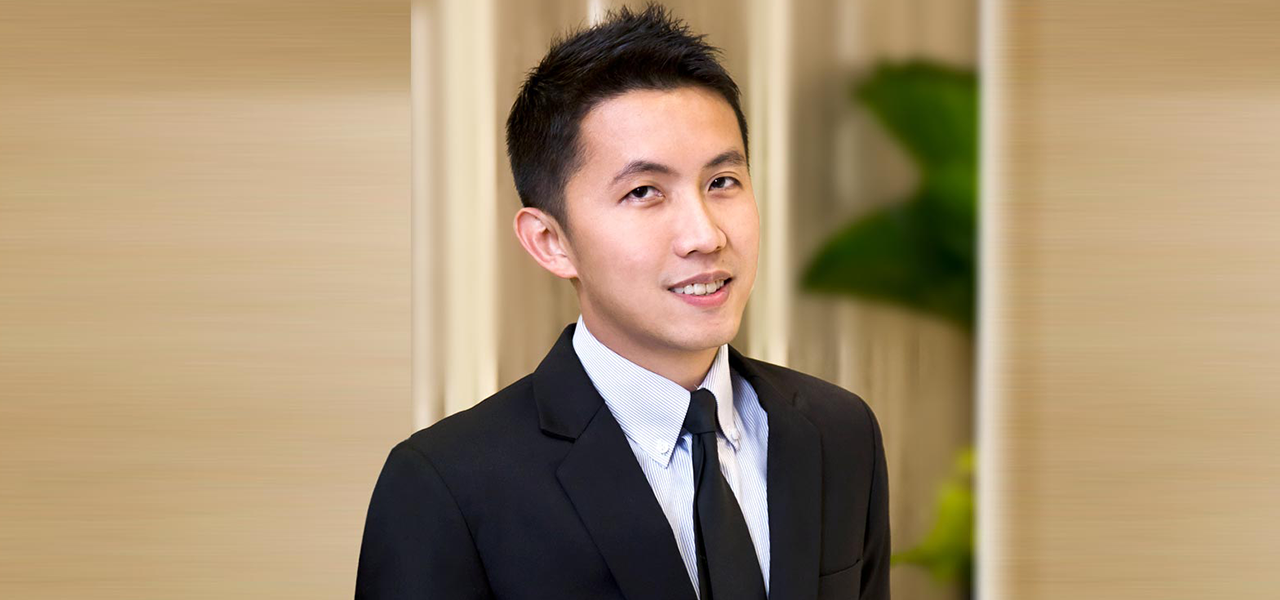





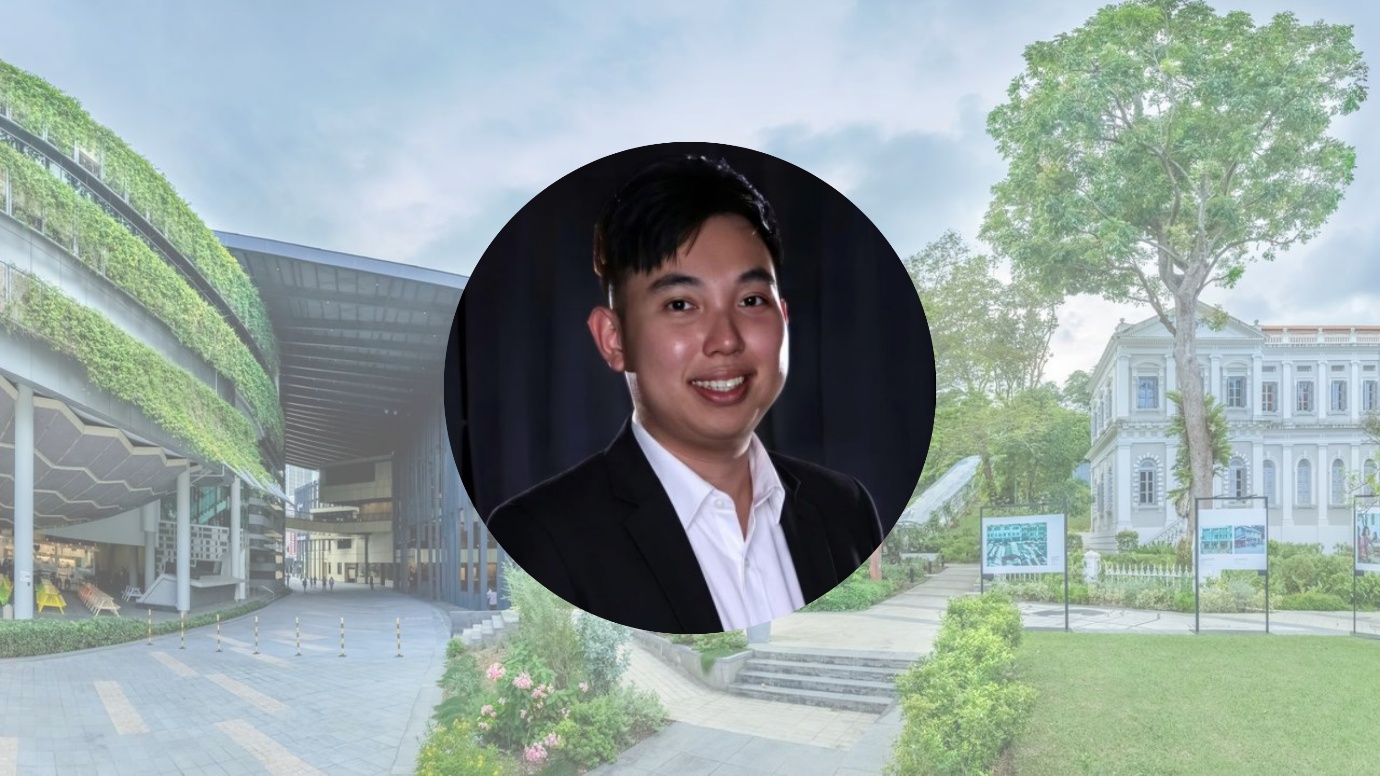
At just 18 years old, Chan Ming Yang was already drawn to the idea of building something meaningful.
While many people his age were still figuring out what came next, he was fascinated by the possibility of creating opportunities instead of waiting for them. Entrepreneurship, to him, was never purely about business. It was about solving problems, bringing people together, and creating real value.
That mindset would eventually take him across industries spanning maritime operations, media, entrepreneurship, and youth development. Along the way, he led teams through periods of uncertainty, built businesses under pressure, and developed a leadership philosophy grounded in adaptability, resilience, and people centred growth.
Today, much of his work focuses on helping others become confident and future ready leaders. But despite years of hands-on experience, Ming Yang knew there was still room to grow.
That was what led him to the SMU MSc in Entrepreneurship and Innovation (MEI).
Moving Beyond Experience into Strategic Leadership
By the time Ming Yang entered the MEI programme, he had already spent years operating in fast paced and high-pressure environments. Real world experience had sharpened his instincts and execution capabilities, but he wanted something more.
“At this stage of my career, I wanted to refine both my strategic thinking and leadership perspective,” he shares. “MEI gave me the opportunity to step back from constant execution and think more deeply about innovation, organisational growth, and long-term leadership.”
Rather than pursuing another qualification for the sake of credentials, he saw the programme as a chance to challenge his thinking and expand his perspective.
He was particularly interested in understanding how innovation could be scaled systematically rather than relying purely on instinct. MEI helped him connect years of entrepreneurial intuition with structured frameworks, strategic models, and global perspectives on leadership and innovation.
“Entrepreneurship can sometimes become very operational and reactive. MEI helped me better balance execution with strategic thinking.”
Learning Through Diverse Perspectives
One of the biggest takeaways from the programme came not from a single classroom or module, but from the people around him.
MEI brought together professionals from different industries, cultures, and backgrounds, creating an environment where diverse viewpoints constantly challenged assumptions and sparked new ways of thinking.
“One of the most valuable aspects of MEI was learning alongside people with completely different experiences and perspectives,” he says. “It reminded me that innovation often happens when different viewpoints intersect.”
Classroom discussions around innovation strategy, organisational behaviour, leadership psychology, and entrepreneurial thinking pushed him to think beyond industry specific solutions. Conversations frequently revealed how different sectors approached similar problems in completely different ways.
For Ming Yang, those moments reinforced an important lesson: strong leadership requires both confidence and humility.
“No matter how much experience someone has, there is always something new to learn from others.”
Redefining What Leadership Means Today
Having worked across entrepreneurship, operations, media, and youth development, Ming Yang believes leadership today requires far more than technical expertise.
In a rapidly evolving world shaped by technology, globalisation, and constant disruption, future ready leaders must be adaptable, emotionally intelligent, and able to communicate with clarity.
“We live in a world where ideas move quickly and industries evolve rapidly. Communication and confidence are no longer optional skills. They are leadership essentials.”
He believes the ability to influence, inspire trust, and bring people together has become increasingly important in uncertain environments. To him, confidence is not about being the loudest person in the room, but about having the courage and clarity to lead through complexity.
That belief now shapes much of the work he does today as he develops young leaders and future professionals.
Entrepreneurship Beyond Business
While entrepreneurship is often associated with starting companies, Ming Yang sees it as something much broader.
“Entrepreneurial thinking is really about identifying opportunities, solving problems creatively, and taking ownership,” he explains.
Whether inside organisations, communities, or educational spaces, he believes entrepreneurial mindsets can drive meaningful impact by encouraging people to move beyond identifying problems and start building solutions.
That philosophy also reflects how he approaches leadership personally.
Looking back on his journey so far, one mindset continues to guide him through both growth and uncertainty: embracing discomfort.
“Every meaningful stage of growth required stepping into uncertainty, learning quickly, and adapting under pressure,” he says. “Challenges are unavoidable, but they refine your thinking and strengthen your character.”
Advice for Future MEI Students
For professionals considering MEI, Ming Yang encourages them to approach the programme with openness and curiosity.
“The real value of MEI goes beyond textbooks or frameworks,” he shares. “It comes from the conversations, collaborations, and exposure to different ways of thinking.”
For those who hope to create meaningful impact through entrepreneurship and innovation, he believes the key lies in staying adaptable, purpose driven, and willing to continuously evolve.
“MEI can provide the environment, network, and perspective to accelerate your journey. But the real transformation comes from how willing you are to apply those lessons with intention and authenticity.”