





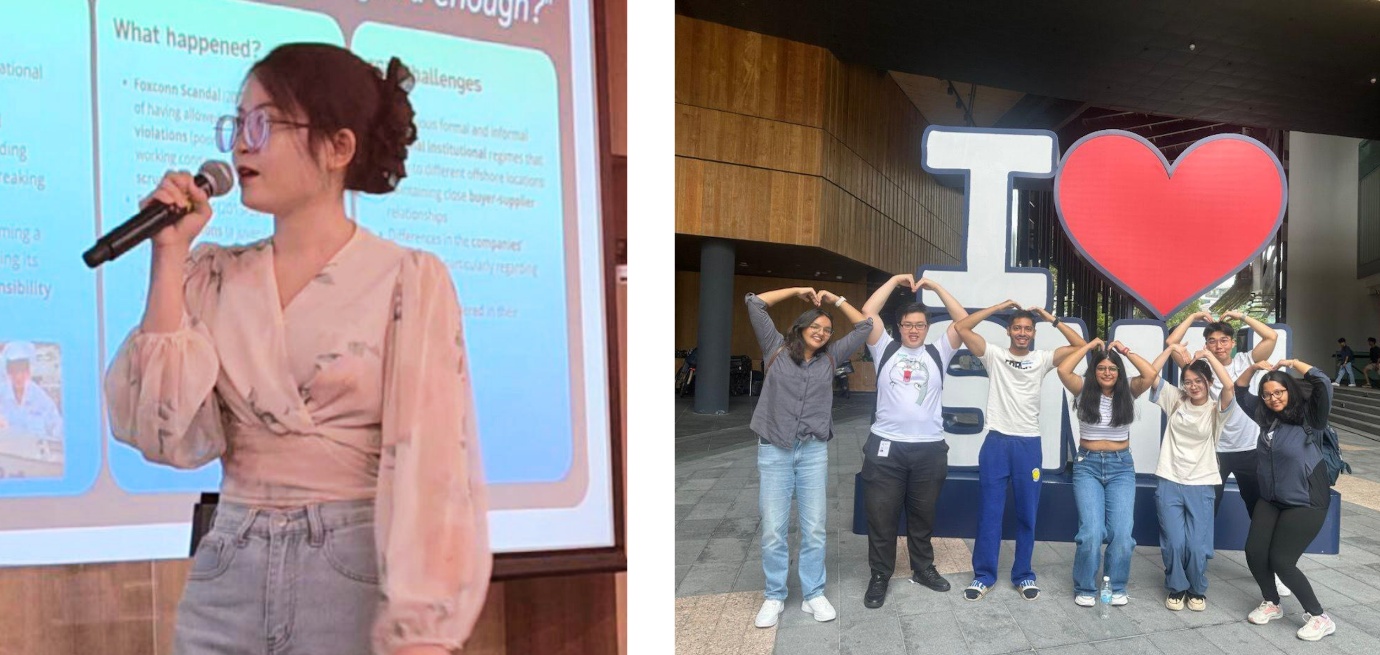
Before officially starting the MSc in Management (MiM) programme, I assumed that my first semester would mainly be about “finding my footing” academically: getting used to the courses, grading systems, and core theoretical frameworks. In reality, I did learn a great deal of new and valuable knowledge. However, what stayed with me the most after the first semester was not what appeared on lecture slides, but a series of very real moments: late-night group discussions over iced coffees, presentations prepared within fast-moving timelines, and unexpected situations that made me realise there was still significant depth to develop in my thinking.
Looking back, the first semester felt like a continuous process of engagement with new concepts, tight deadlines, group projects, classmates from diverse backgrounds, and, most importantly, my own way of thinking. The skills I describe below were developed through a combination of classroom learning, practice, and real-world application.
Case analysis: from “reading to get it done” to truly understanding the core issue
In my first few case-based classes, I assumed that doing well simply meant reading the case carefully and proposing as many solutions as possible. However, during an early ‘Managing People and Organizations’ class discussion, after my group finished presenting our analysis, the professor asked a seemingly simple question: “What is the main issue with one of the solutions you are proposing?” — and my group went quiet.
That moment made me realise how quickly we had jumped to broad, surface-level solutions without fully understanding the case's core problem. After a few similar experiences, I began to slow down my thinking and approach: asking more questions, distinguishing between symptoms and root causes, and challenging my own assumptions. Over time, I learned that doing a case well is not about generating as many solutions as possible, but about building a clear, well-supported argument with sufficient depth, grounded in the theories we learn in class.
Cross-cultural teamwork: more than just different nationalities
One of the groups I worked with during my first semester was composed of members from several countries, each with a very distinct working style. Some preferred working in a highly detailed, fast-paced manner; others focused more on the big picture; a few spoke frequently during group meetings, while others mainly remained quiet.
At one point, our group spent as many as five meetings simply trying to agree on a shared approach to the problem, and everyone felt slightly overwhelmed by the process. Over time, however, I realised that the challenge was not a lack of ability or commitment, but differences in communication styles and expectations. Working with this group throughout the semester pushed me to articulate my own viewpoints more clearly and to become more intentional about creating space for quieter members to contribute, because some of the most valuable insights often come from those who speak the least. By the end of the semester, many of these group members had also become close friends.
Presentations: getting past the feeling of “not being good enough.”
I still remember my very first presentation of the semester, standing in front of the class while feeling far from confident about the part I was responsible for. My group had prepared for weeks, and yet when it was my turn to speak, I rushed through my slides, mainly looking at the screen rather than the audience, and silently hoping my part would end quickly so the next person could take over.
After that presentation, I received feedback that the content itself was solid, but the delivery was not convincing because my nervousness made the presentation feel disjointed. Rather than feeling discouraged, I started to acknowledge my weaknesses and prepare more intentionally for future presentations: practising speaking more slowly and clearly and managing my time better. One of my group mates, who was a stronger presenter, also took the time to share practical advice with me, which I deeply appreciated and which reminded me how much we learn from one another within the cohort.
Critical thinking: learning to question yourself
One of the things that surprised me most at SMU was that many courses didn’t allow us to simply “agree” with the models or strategies presented in class. In our Strategy class discussion, after we class analysed a seemingly solid plan, the professor kept asking questions like, “What would happen if this strategy were applied in a different market?” or “Who would be negatively affected by this decision?”
These seemingly simple questions forced me to step beyond safe, obvious answers and look at the problem from multiple perspectives. Over time, I developed the habit of critically checking my own reasoning: Are my initial assumptions valid? Am I overlooking any essential aspects? I realised that critical thinking isn’t about contradicting others for the sake of it, it’s about refusing to accept the first answer if it isn’t entirely justified and comprehensive.
Adaptability: lessons from overlapping deadlines
My first semester in the MiM programme felt demanding at times. There were weeks when I had to juggle multiple group projects, individual assignments, and presentations in close succession. The busiest moments came when I had just finished meeting several group deadlines, only to move straight into final exams with limited time in between. At the beginning of the programme, I occasionally felt stretched and unsure whether I was fully keeping pace.
Yet it was precisely during these high-pressure periods that I learned how to adapt. I became more intentional about setting priorities, more transparent and realistic in my communication with group members, and more willing to accept that not everything can be perfectly prepared. Instead of trying to control every detail, I learned to focus on what would create the most value within the limited time and energy available.
For me, adaptability is no longer an abstract concept. It is the ability to remain effective and composed when things do not go according to plan: a skill I am certain will continue to shape not only my future semesters, but also my professional life beyond the classroom.
What I take away from my first semester
After my first semester, I am certain that I have changed for the better in how I approach learning, how I work with others, how I think, and how I evaluate business problems. The skills I developed did not emerge in isolation; they were shaped through particular experiences, from lengthy classroom discussions and group projects with conflicting viewpoints to tight deadlines that forced me to make decisions faster than I was used to.
As I move into the next semester, I plan to continue challenging myself through more complex projects, deeper discussions, and situations that more closely reflect real-world business contexts. For me, the MiM program is not just an academic step forward, but an ongoing process of learning how to work more professionally every day, even when things are far from perfect.
If I could offer one piece of advice to those about to begin the MiM journey, it would be this: don’t worry too much about getting everything “right” from the start. Be willing to engage, make mistakes, and, most importantly, learn from those experiences. Looking back, the most significant value of my first semester was not in grades, but in how much I grew each time I stepped outside my comfort zone.