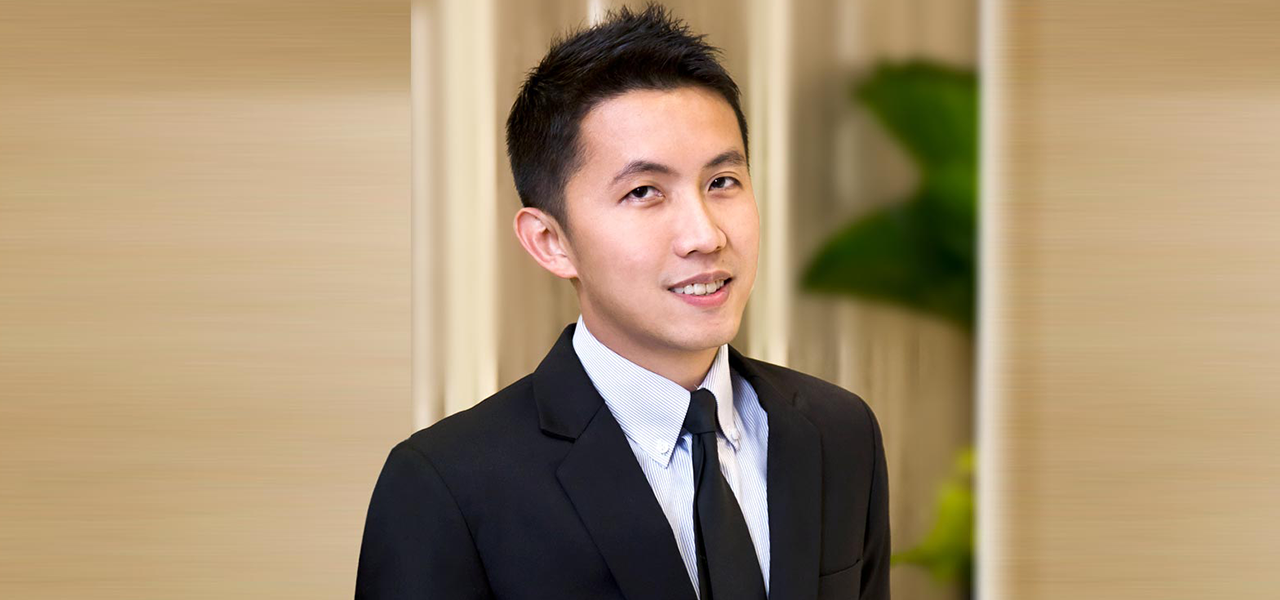





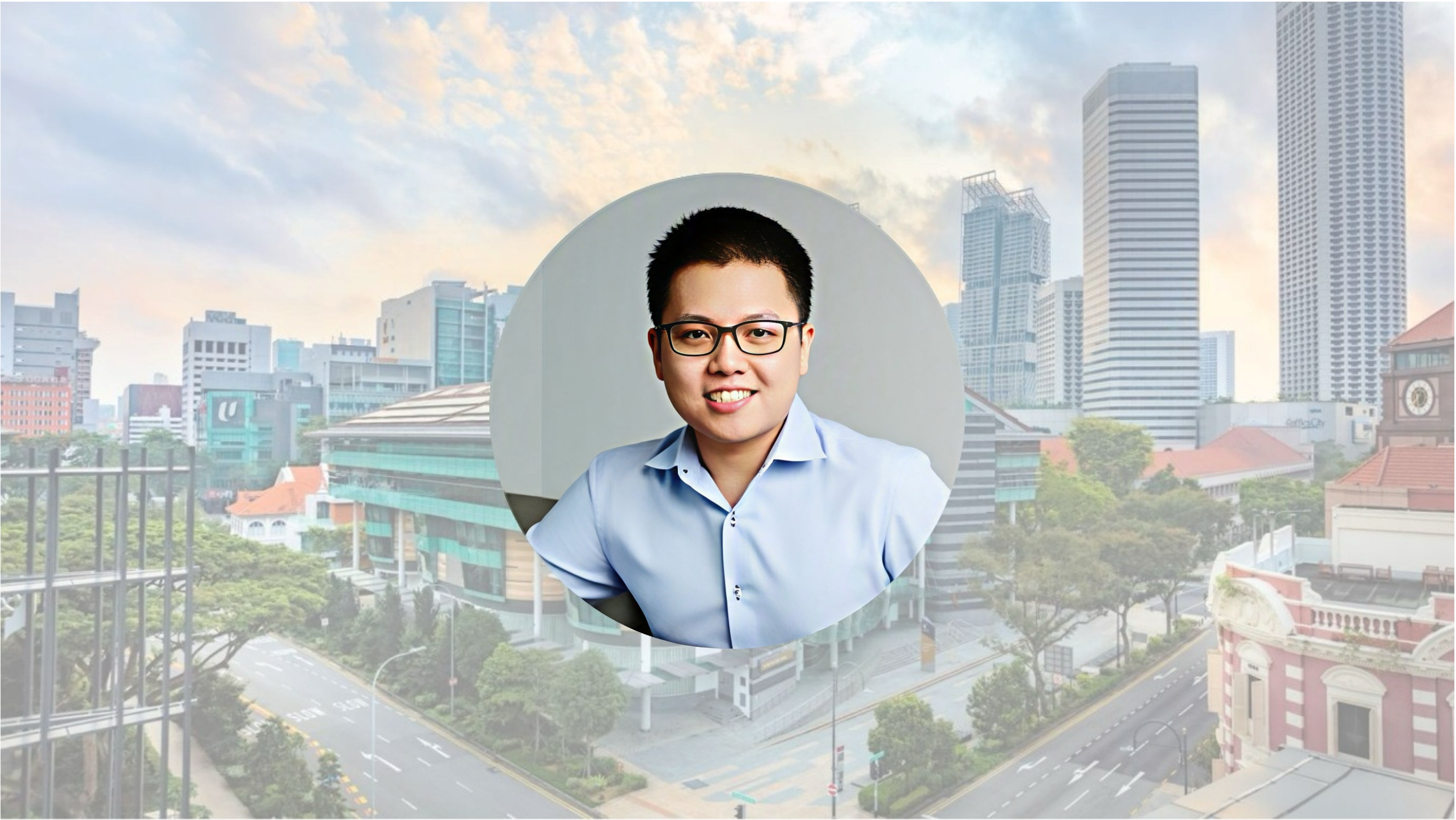
For many professionals, career progression follows a predictable path. But for Clement Ng, curiosity proved to be a far stronger compass than convention.
Today, Clement works on the front office commodities trading desk at Gunvor, where every trading day demands quick thinking, analytical rigour and the ability to make high quality decisions in constantly changing markets. Yet his career began in a very different place, as an auditor specialising in the banking sector.
"I enjoyed the strong foundation audit gave me in financial statements, controls and risk," he reflects. "But over time, I realised I was looking for something more dynamic and intellectually stimulating."
That search for something more would eventually lead him to the SMU MSc in Quantitative Finance (MQF) programme, but not before years of deliberately investing in himself.
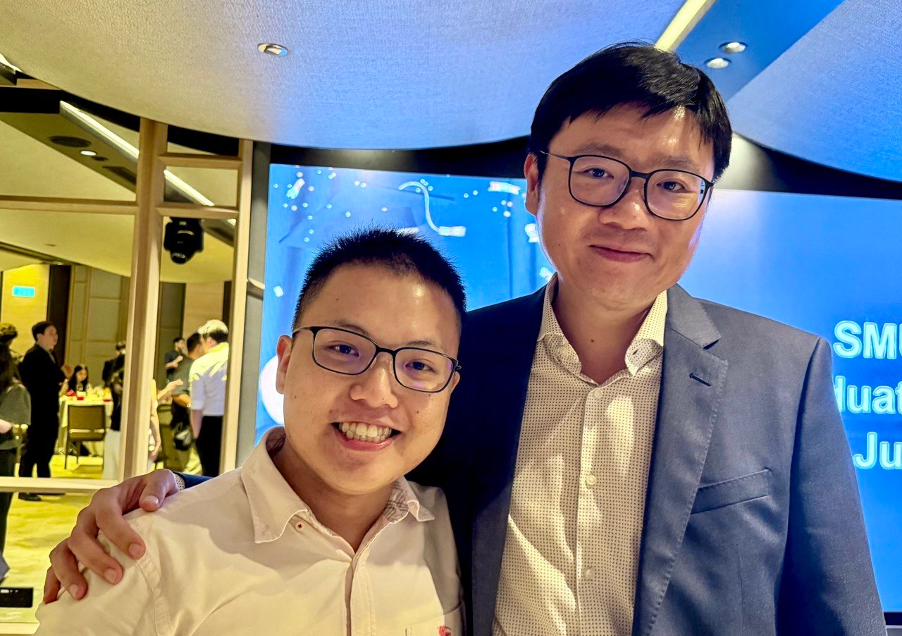
A Learning Journey That Never Stopped
The turning point came in 2020.
While working full time, he enrolled in a six-month Machine Learning programme with SMU Academy, attending classes during evenings and weekends. It was his first formal exposure to programming, statistics and machine learning, and it fundamentally changed the way he viewed finance.
"It opened my eyes to how technology and quantitative models could solve real business problems."
Instead of treating the programme as a one-off course, he saw it as the beginning of a much larger journey. He continued sharpening his skills through online quantitative finance courses, built his own systematic trading projects and later completed a Data Science programme with General Assembly.
Meanwhile, his career evolved from audit into commodity risk management before eventually moving into a front office commodities trading role.
"Working closer to the markets allowed me to see how financial knowledge, risk management and quantitative analysis all come together in practice. It reinforced my interest in using data and models to support trading decisions."
By then, he had accumulated knowledge from multiple sources but realised he wanted something deeper.
"I wanted to move beyond learning different subjects in isolation. I was looking for a rigorous programme that could bring together mathematics, programming, risk management and quantitative modelling in an integrated way."
That search led him to SMU MQF.
Where Markets Meet Technology
Life on a commodities trading desk is often portrayed as exciting and while that's true, it also requires immense discipline.
His role involves trade execution, back testing trading strategies, and developing and maintaining the team's code repository. Markets move quickly, priorities shift constantly, and there is little room for error.
"The biggest challenge is balancing multiple priorities while maintaining a very high level of accuracy."
Rather than relying on manual processes, he turned to automation.
"I've learned that efficient coding and automation don't just make you faster. They improve the quality and consistency of decision making while freeing up more time to focus on what really matters: identifying new trading opportunities."
The Future Belongs to Those Who Can Combine Multiple Disciplines
As artificial intelligence continues reshaping the financial industry, Clement believes the future will not belong solely to the best programmers or the best traders, but to professionals who can bridge both worlds.
"I don't think AI alone will be the biggest competitive advantage over the next five to ten years."
Instead, he believes success will come from combining three complementary disciplines:
- Quantitative finance to build robust mathematical models.
- AI to identify complex patterns across massive datasets.
- Data analytics to transform information into actionable market insights.
Together, these capabilities allow traders to make faster, better informed and more consistent decisions.
However, despite rapid advances in AI, he does not believe traders will become obsolete.
"AI will automate many routine tasks, but human judgement remains incredibly important. Traders will spend more time interpreting market developments, validating model outputs, managing risk and making strategic decisions."
Don't Let the Maths Scare You
For prospective MQF students, quantitative finance can seem intimidating, especially for those without strong programming backgrounds.
His advice is refreshingly practical.
"If possible, pick up some programming before the programme begins because coding is used throughout almost every module. It is also helpful to revisit some calculus."
More importantly, he encourages applicants not to be discouraged by the technical nature of the curriculum.
"The professors explain concepts clearly and build them up in a structured way. If you're genuinely curious about quantitative finance or systematic trading, and you're willing to put in the effort, you'll find the programme both manageable and incredibly rewarding."
For Clement, the MQF was not simply another qualification. It was the culmination of years of continuous learning and proof that meaningful career transitions are often built one deliberate step at a time.