





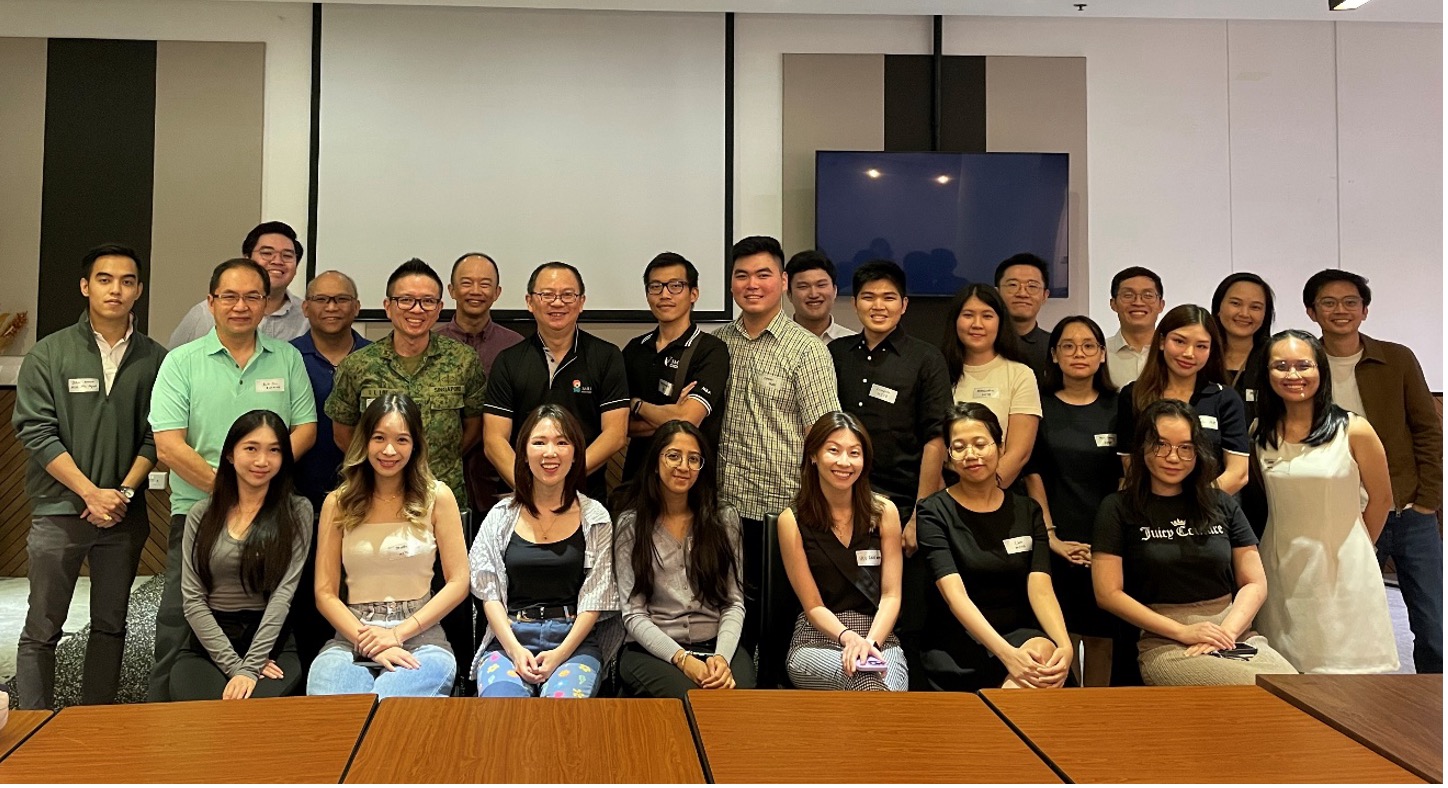
What does a former military officer, a portfolio management professional, and a finance veteran turned entrepreneur have in common?
At first glance, very little.
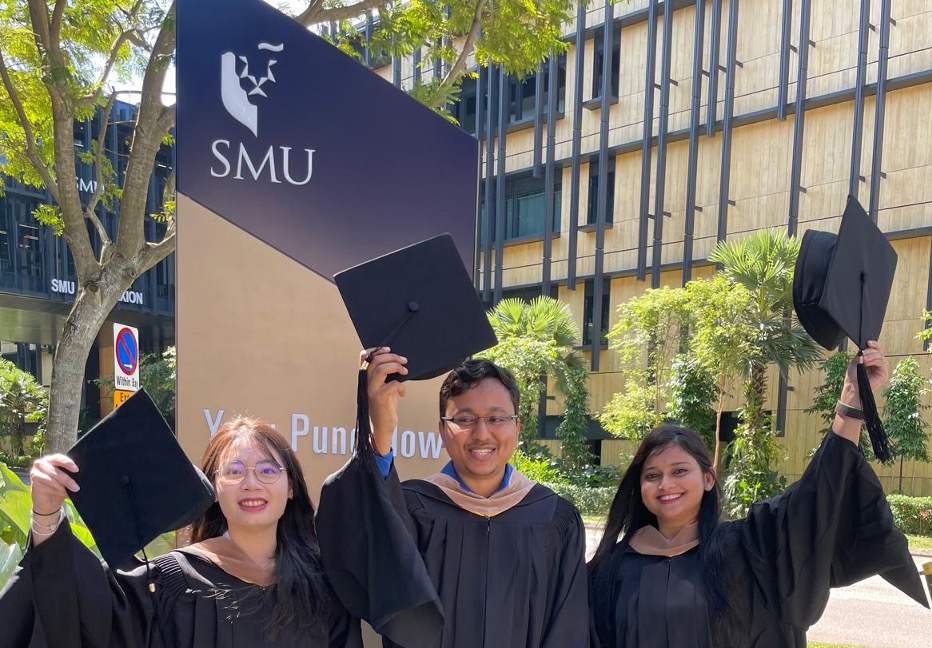
Yet when Colin, Lewis, and Shruti enrolled in SMU's Master of Science in Applied Finance (MAF) and Master of Science in Quantitative Finance (MQF) programmes, they shared a common goal: to push themselves beyond what they already knew and prepare for what came next.
Their journeys demonstrate that success in finance is not defined by where you start, but by your willingness to keep learning.

MAF: One Programme, Two Very Different Journeys
When Colin and Lewis entered the Master of Science in Applied Finance programme, they came from opposite ends of the spectrum.
For Colin, finance was completely unfamiliar territory.
For Lewis, finance was already his profession.
Yet both found value in the same programme and emerged with a deeper understanding of markets, investing, and decision-making.

Learning Finance from the Ground Up
After serving in the Singapore Armed Forces for 30 years, Colin was awarded the Warriors Scholarship by SMU and MINDEF as part of his transition from military service.
Given the opportunity to pursue a master's degree, he deliberately chose a field that had been missing from his professional experience.
"Finance was something terribly missing in my life."
Among the various postgraduate options available, MAF stood out as the programme that best suited his interests and personality.
The transition was not easy. Colin entered the classroom with virtually no finance background.
"Coming from a non-finance background, I started the programme with little understanding of accounting, financial statements, portfolio management, or broader financial concepts."
What initially felt daunting soon became one of the most rewarding aspects of the experience. Despite being one of the oldest students in the cohort, he found himself surrounded by classmates eager to share their expertise and perspectives.
"Three quarters of the class were already working in finance, and several CFA charterholders. The discussions were incredibly engaging."
He credits the faculty for creating an environment where students from all backgrounds could thrive.
Modules such as Corporate Finance and Equity Analysis and Portfolio Management broadened his understanding of financial markets, but the defining experience was Applied Portfolio Management.
Managing live capital and participating in financial modelling and investment decisions gave him a firsthand taste of what it means to think and act like a professional portfolio manager.
Today, Colin continues to contribute in a civilian role within the organisation he spent three decades helping to build. While he did not pursue a career switch into finance, the programme gave him something equally valuable: confidence, financial literacy, and a new perspective that will stay with him long after graduation.
Looking back, his advice to prospective students is simple:
"The experience is as great as what you are prepared to make of it. Just like the market, stay invested and enjoy the ride."
Sharpening the Craft
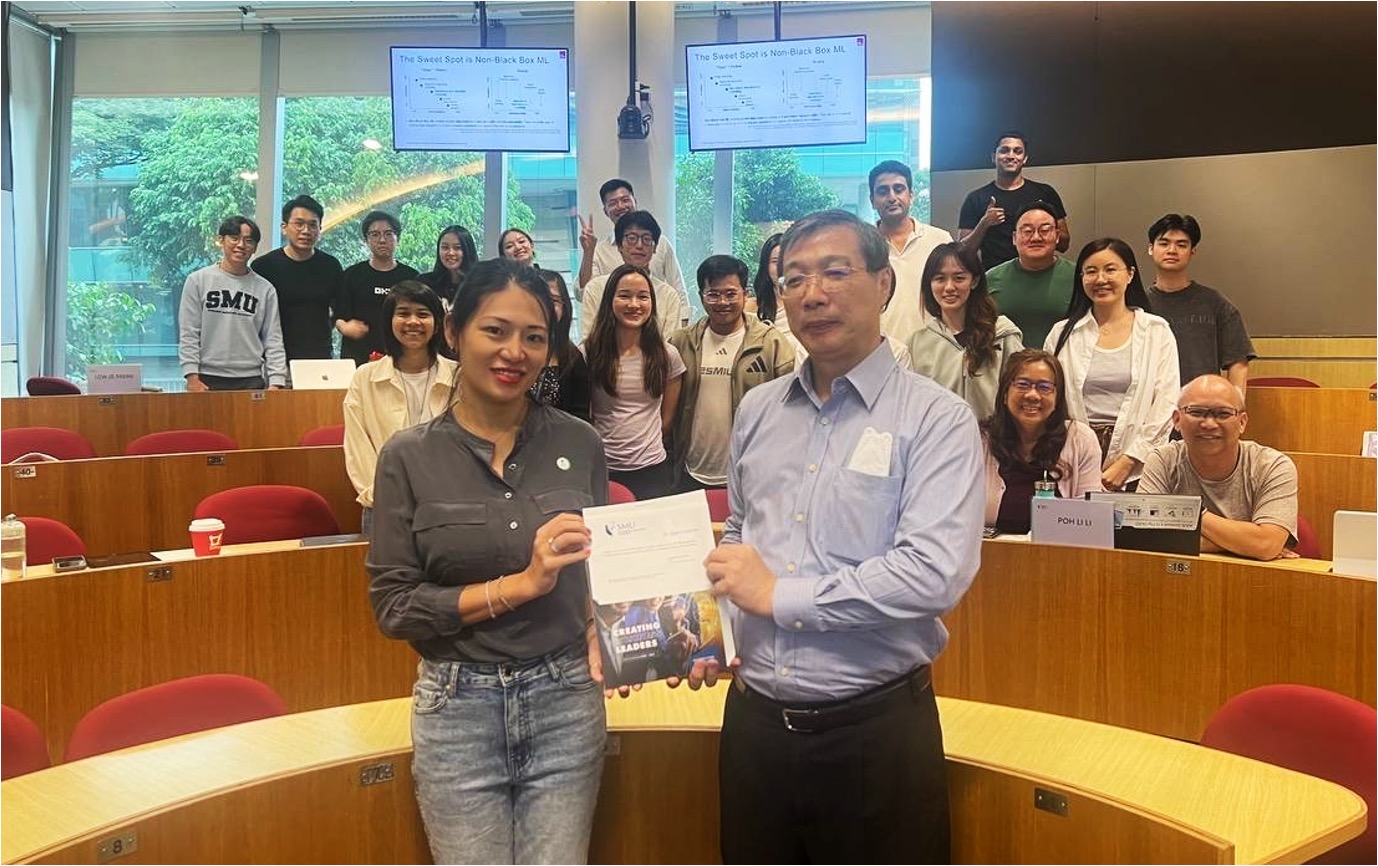
For Lewis, the motivation was very different.
Already working in portfolio management, he was not looking for a career change or another credential. Instead, he wanted structured exposure to advanced portfolio theory, quantitative methods, and the kind of cross-asset thinking that does not always surface in day-to-day work.
"The MAF's rigour and practitioner-focused approach made it the right fit at that stage of my career."
Balancing a demanding full-time role with part-time study required discipline and commitment. Lewis approached the programme with a simple philosophy.
"You get out what you put in."
That mindset became a source of motivation throughout the programme. The more deeply he engaged with the coursework, the more value he gained from it.
Many of the concepts learned in class translated directly into his professional responsibilities. Portfolio construction frameworks, factor analysis, and risk-adjusted return methodologies became tools he could immediately apply at work.
The Applied Portfolio Management module was particularly impactful.
"It bridged theory and practice in a way that made the frameworks immediately useful in my day-to-day role."
Beyond the technical knowledge, Lewis found tremendous value in the classroom itself.
The diversity of the cohort created discussions that challenged assumptions and broadened perspectives.
"You could have an engineer, a banker, and an asset manager analysing the same company and arriving at very different conclusions. That diversity sharpens everyone's thinking."
Perhaps the most important lesson he took away from the programme was not about finance at all.
"A good outcome does not necessarily mean a good decision."
Learning to evaluate decisions based on process rather than outcomes, separating luck from skill, and interrogating assumptions more rigorously has fundamentally shaped how he approaches both investing and professional decision-making.
Different Goals, Shared Experience
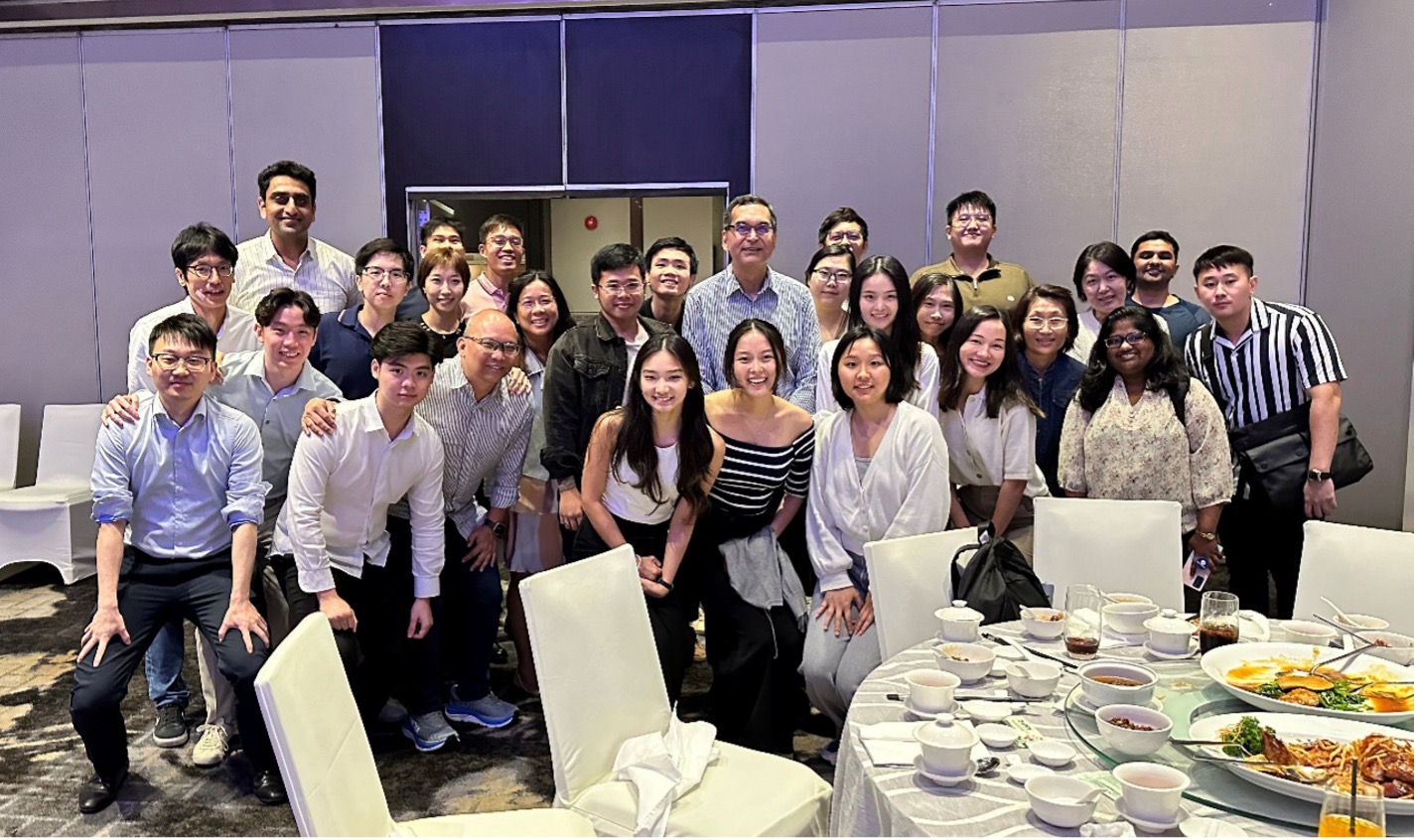
Although Colin and Lewis entered MAF for very different reasons, both point to the same strengths: practitioner-led teaching, applied learning, and a highly engaged cohort.
For Colin, MAF opened the door to a completely new discipline.
For Lewis, it elevated an already successful finance career by strengthening his investment framework and sharpening his judgement.
Together, their stories demonstrate the versatility of the programme and the many ways finance education can create value.
MQF: Building the Quantitative Edge
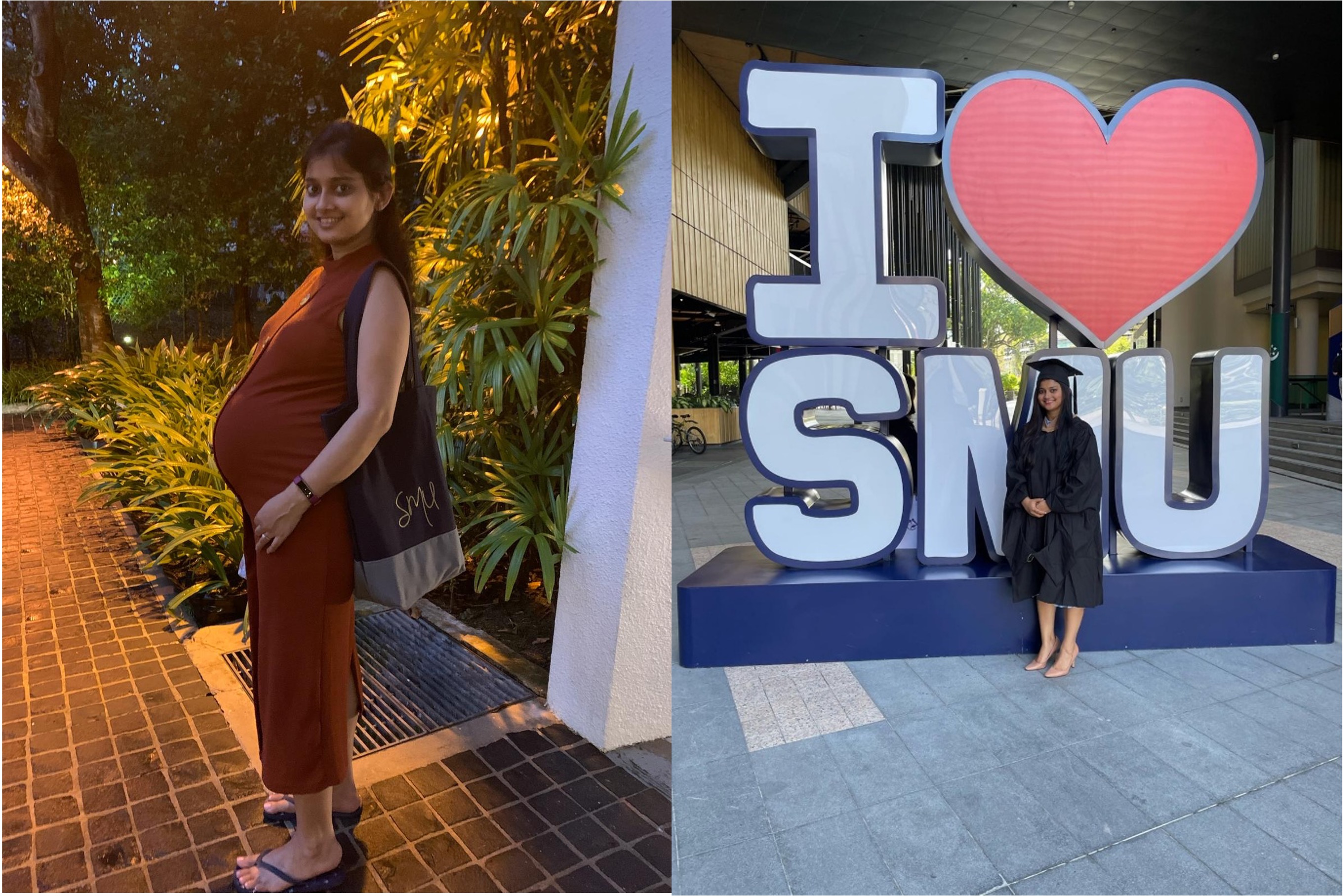
While Colin and Lewis used MAF to broaden and deepen their understanding of finance, Shruti pursued MQF to answer a different question altogether.
How do you move beyond understanding financial markets to understanding the machinery that powers them?
By the time she enrolled in MQF in 2020, Shruti already had over a decade of experience in finance.
She had worked in financial data analytics, held a senior treasury role within a sovereign-backed institution in Dubai, and built a strong foundation in financial markets.
Yet she often found herself confronting a gap.
"When banks priced structured products or exotic instruments for us, we accepted the number. That asymmetry bothered me."
She wanted to understand how those prices were generated rather than simply interpreting the results.
"The MQF sat at the intersection of technology, financial theory, and quantitative methods. That combination was exactly what I was looking for."
At the same time, she was increasingly interested in machine learning and artificial intelligence. Even before AI became a mainstream conversation, she recognised the potential of data-driven models in shaping the future of finance.
MQF delivered exactly the challenge she was seeking.
Python was largely unfamiliar territory. Numerical Methods required students to build Monte Carlo simulations and pricing models from scratch. Advanced quantitative modules introduced concepts such as stochastic differential equations, Brownian motion, and risk-neutral pricing frameworks.
"These were not concepts I could coast through on prior knowledge. I had to actually work for them."
What made the journey manageable was the support ecosystem surrounding the programme.
Late-night study sessions with classmates, responsive faculty members, and a programme office deeply invested in student success ensured that while the programme was rigorous, students were never left to navigate it alone.
One module stood out above all others.
The machine learning module challenged students to develop a model capable of predicting Russian bank bankruptcies months before they occurred.
Working with real-world financial data, Shruti saw firsthand how quantitative methods could uncover signals hidden within noisy and highly imbalanced datasets.
"The model proved that you could see it coming. That idea of finding early signals in noisy data has stayed with me ever since."
The lessons extended far beyond the classroom.
At Mapletree, the programme enabled her to ask sharper questions and approach capital management with greater sophistication.
Today, she is the founder of Tiny Thinkers, an AI-powered adaptive learning platform operating across multiple countries, and serves as Director at QZ Capital, a deeptech co-investment network.
While she does not consider herself an engineer, she credits MQF with giving her the confidence to engage meaningfully with technical founders, evaluate complex models, and navigate increasingly technology-driven industries.
"The programme taught me how to interrogate models, ask better questions, and think more rigorously. That makes all the difference whether you're in a boardroom, on stage, or evaluating an investment."
She also credits the industry practitioners for bringing the curriculum to life.
Many of her professors were active practitioners from banks, hedge funds, and portfolio management firms. Their real-world experiences helped connect theory with practice and provided insights that textbooks alone could never offer.
"The cohort and the practitioners were as valuable as the curriculum itself."
For prospective students who may not come from traditional quantitative backgrounds, Shruti offers a powerful reminder.
"Don't wait for the perfect moment, because it won't come."
Having completed the programme during the pandemic while pregnant and sitting examinations shortly after giving birth, she understands better than most that growth rarely happens under ideal circumstances.
"A non-traditional background is actually an asset. You bring a different lens to the problems. The gap between understanding concepts and being able to build them is exactly what MQF helps close."
One Goal: Continuous Growth
The journeys of Colin, Lewis, and Shruti could not be more different.
One entered finance for the first time after a distinguished military career.
One sought to sharpen an already established investment career.
One pursued deeper quantitative expertise and emerged as an entrepreneur operating at the intersection of finance, technology, and AI.
Yet all three share a common lesson.
The most successful professionals are not necessarily those who know the most. They are the ones willing to keep learning, challenge their assumptions, and invest in their own growth.
Whether your goal is to pivot into finance, deepen your expertise, or build entirely new opportunities, MAF and MQF provide the knowledge, network, and practical exposure to help you move forward with confidence.
Because in finance, where you start matters far less than where you are willing to go.